
In short: Learn about all the problems a home inspection can reveal, from foundation cracks to radon, before you buy a home in Charlotte.
📅 September 28, 2026 • ⏱️ 10 min read
Buying a home in Charlotte is one of the largest financial decisions most people will ever make, and a home inspection is where you find out about all the problems a property might be hiding before you’re the one who owns them. While fresh paint, updated kitchens, and attractive staging can make a property appear move-in ready, hidden defects can be lurking beneath the surface.
From crawl space moisture problems caused by North Carolina’s humid climate to foundation movement related to Charlotte’s clay soils, some issues can lead to repairs costing thousands, or even tens of thousands, of dollars. Understanding these common home inspection red flags can help you make an informed decision before closing day and avoid costly surprises after moving in.
What Charlotte Home Inspections Reveal
For a quick rundown of the most common findings we see across the region, see our related post on the most common home inspection defects in Charlotte-area homes. This guide goes deeper into the full range of issues and what they tend to cost.
Whether you’re considering a historic home in Plaza Midwood, Dilworth, or Myers Park, or a newer property in Ballantyne, Steele Creek, Huntersville, or South End, knowing what to look for can protect your investment.
Quick Reference: Findings at a Glance
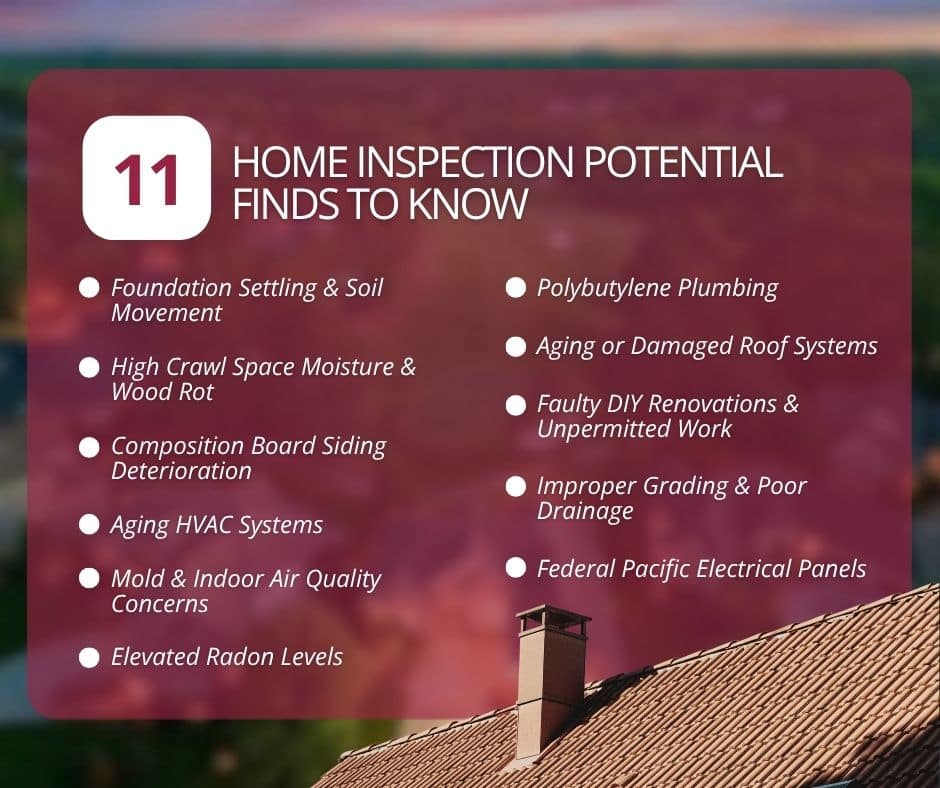
| # | Issue | Most Common Cause in Charlotte | Cost Tier |
| 1 | Foundation Settling & Soil Movement | Clay soil expansion/contraction | $$–$$$ |
| 2 | Crawl Space Moisture & Wood Rot | Humid climate, poor drainage | $$–$$$ |
| 3 | Composition Board Siding Deterioration | Moisture intrusion (1980s–90s builds) | $–$$$ |
| 4 | Aging HVAC Systems | Long cooling season, system age | $$–$$$ |
| 5 | Mold & Indoor Air Quality | Persistent moisture | $–$$ |
| 6 | Polybutylene Plumbing | Homes built 1978–1996 | $–$$ |
| 7 | Aging or Damaged Roof Systems | Storms, hail, age | $$–$$$ |
| 8 | Faulty DIY Renovations & Unpermitted Work | Competitive reno market | $$–$$$ |
| 9 | Improper Grading & Poor Drainage | Poor site planning | $–$$ |
| 10 | Federal Pacific Electrical Panels | Homes built 1950s–1980s | $$ |
| 11 | Elevated Radon Levels | Naturally occurring gas | $ |
$ = typically monitoring or a minor repair · $$ = moderate repair or partial replacement · $$$ = major system replacement
Foundation Settling and Soil Movement
Warning Signs
- Small drywall cracks
- Minor stair-step cracks in brick veneer
- Doors or windows that occasionally stick
- Slightly uneven floors
- Larger diagonal cracks around openings
Why It Matters
Charlotte’s expansive clay soil naturally expands during wet periods and shrinks during dry conditions. This continual cycle can cause homes to experience some degree of foundation movement over time.
Minor foundation settling cracks are common in many homes and are often considered a normal part of the aging process. Small cosmetic cracks in drywall or masonry do not automatically indicate a structural problem.
However, larger cracks, rapidly worsening movement, significant floor sloping, or doors and windows that no longer operate properly may indicate a more substantial issue that deserves further evaluation by a qualified professional.
Potential Cost: Many minor settling issues require only routine monitoring or cosmetic repairs. More significant foundation movement may require stabilization measures depending on the cause and severity of the problem.
High Crawl Space Moisture and Wood Rot
Warning Signs
- Standing water in the crawl space
- Damp or fallen insulation
- White mineral deposits on masonry walls
- Visible wood decay or fungal growth
Why It Matters
Charlotte’s hot, humid climate creates ideal conditions for moisture accumulation in crawl spaces. Excess moisture can damage structural wood framing, rust metal components, reduce energy efficiency, and contribute to long-term deterioration.
Potential Cost: Moisture control solutions may involve drainage improvements, vapor barriers, encapsulation systems, or structural repairs depending on the extent of the damage.
Composition Board Siding Deterioration
Warning Signs
- Swollen or soft siding panels
- Delamination (layers separating)
- Deterioration along bottom edges
- Loose or missing caulking at joints and trim
- Areas of rot around windows, doors, and roof intersections
Why It Matters
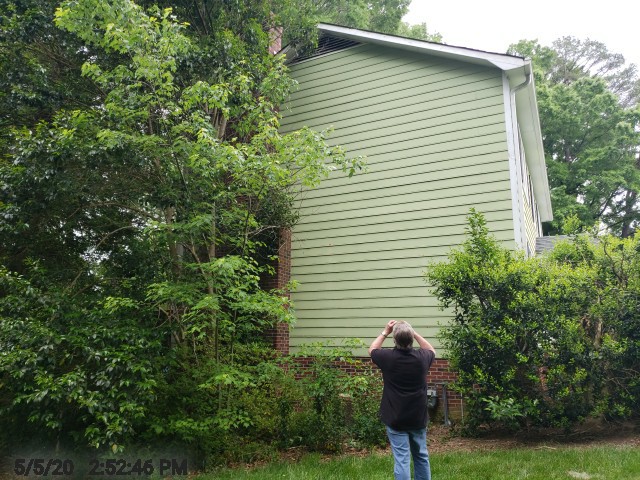
Composition board siding, sometimes referred to as hardboard siding, was widely installed on homes throughout the Charlotte area during the 1980s and 1990s. When properly installed and maintained, these products can provide many years of service.
However, they are particularly vulnerable to moisture intrusion if paint, caulking, or flashing systems are not adequately maintained.
Over time, exposure to moisture can cause the siding to swell, soften, deteriorate, or separate into layers. The most common problem areas are near the ground, around windows and doors, beneath roof drip lines, and at locations where sprinkler systems regularly wet the siding.
The presence of composition board siding does not automatically indicate a problem. Many homes still have siding that remains in serviceable condition. The key is evaluating the current condition, maintenance history, and whether moisture-related damage is present.
Potential Cost: Minor repairs and routine maintenance may help extend the life of the siding. More extensive deterioration may require partial replacement of damaged sections or, in some cases, complete siding replacement depending on the extent of the damage.
Aging HVAC Systems
Warning Signs
- System age exceeding typical service life
- Short cycling
- Uneven temperatures throughout the home
- Rusted components or excessive repairs
Why It Matters
Charlotte’s long cooling season places significant demands on air conditioning systems. An aging HVAC unit may struggle to maintain comfort and operate efficiently.
Potential Cost: Heating and cooling system replacement can be a substantial investment, especially when ductwork modifications are also needed.
Mold and Indoor Air Quality Concerns
Warning Signs
- Musty odors
- Visible mold growth
- Water stains on ceilings or walls
- Excessive humidity inside the home
Why It Matters
Persistent moisture often leads to mold growth in crawl spaces, attics, bathrooms, and other poorly ventilated areas. In addition to damaging building materials, mold can negatively affect indoor air quality.
Potential Cost: Remediation costs vary widely depending on the source and extent of the moisture problem, as well as the amount of affected material that requires replacement.
Polybutylene Plumbing
Warning Signs
- Gray, blue, or black flexible water supply piping
- Homes constructed between 1978 and 1996
- Polybutylene piping visible near water heaters, crawl spaces, or under sinks
Why It Matters
Polybutylene (PB) is a flexible plastic plumbing material used extensively in residential construction between 1978 and 1996. Millions of homes throughout the United States were built with polybutylene plumbing, and many systems continue to function without issues today.
However, polybutylene has a well-documented history of premature failures in some installations. Over time, chemicals commonly used to disinfect municipal water supplies may contribute to the deterioration of certain pipes and fittings from the inside. Because this deterioration often occurs out of sight, leaks can sometimes develop without obvious warning signs.
The presence of polybutylene plumbing does not necessarily mean immediate replacement is required, but buyers should be aware of the material’s history and understand the potential for future maintenance or replacement costs.
Potential Cost: Some homeowners choose to monitor the system and address issues as they arise, while others elect to replace polybutylene piping proactively. Replacement costs vary depending on the size and layout of the home.
Aging or Damaged Roof Systems
Warning Signs
- Missing or damaged shingles
- Curling shingle edges
- Excessive granule loss
- Damaged flashing around chimneys and roof penetrations
Why It Matters
Charlotte experiences severe thunderstorms, high winds, and occasional hail events that can shorten the lifespan of roofing materials. Small roof issues can quickly develop into costly interior water damage if left unaddressed.
Potential Cost: Roof replacement costs vary depending on size, materials, and complexity but are often among the largest expenses homeowners face.
Faulty DIY Renovations and Unpermitted Work
Warning Signs
- Uneven construction quality
- Improper framing modifications
- Non-standard electrical or plumbing installations
- Additions that appear inconsistent with the original structure
Why It Matters
Charlotte’s competitive housing market has led to extensive renovation activity in many neighborhoods. Unfortunately, not all improvements are completed by qualified professionals or with proper permits.
Potential Cost: Correcting improperly completed work may require extensive repairs and upgrades to meet modern safety standards and local building requirements.
Improper Grading and Poor Drainage
Warning Signs
- Water pooling near the foundation
- Soil erosion around the home
- Damp crawl spaces or basements
- Downspouts discharging near exterior walls
Why It Matters
Proper drainage is one of the most important factors in protecting a home’s foundation and crawl space. During heavy rainfall, poor grading can direct water toward the home rather than away from it.
Potential Cost: Solutions may include grading improvements, drainage systems, downspout extensions, or other water management measures.
Federal Pacific Electrical Panels
Warning Signs
- Federal Pacific Electric (FPE) Stab-Lok panel
- Homes built primarily between the 1950s and 1980s
- Signs of overheating or electrical modifications
Why It Matters
Federal Pacific Stab-Lok panels have been the subject of significant industry concern, documented by InterNACHI, due to reports that some breakers may fail to trip under certain overload conditions. This can increase the risk of electrical hazards.
Potential Cost: Many buyers choose to budget for panel replacement to improve safety and reduce future insurance concerns.
Elevated Radon Levels
Warning Signs
- Radon cannot be seen, smelled, or detected without testing
- Homes with crawl spaces and basements may be at greater risk
Why It Matters
Radon is a naturally occurring radioactive gas that enters homes through openings in foundations and crawl spaces. Elevated levels can occur throughout the Charlotte region and are only identified through testing. The EPA’s radon guidance is a good resource if you want to understand health risk thresholds in more detail.
Potential Cost: Mitigation systems are generally effective at reducing radon levels and can often be installed without major disruption to the home.
Which Home Inspection Issues Are Usually the Most Expensive?
While every home is different, the defects that most commonly result in significant repair costs include:
| Rank | Issue |
| 1 | Foundation movement and structural repairs |
| 2 | Complete siding replacement |
| 3 | Severe crawl space moisture intrusion |
| 4 | Roof replacement |
| 5 | HVAC system replacement |
| 6 | Major plumbing system upgrades |
Identifying these concerns before closing allows buyers to negotiate repairs, request seller concessions, or make a more informed purchasing decision.
Frequently Asked Questions
- What is the biggest red flag during a home inspection? Structural issues, active water intrusion, and significant safety hazards are typically considered the most serious concerns because they can be expensive to repair and may affect the home’s long-term performance.
- Should I walk away from a house after a bad inspection? Not necessarily. Many inspection findings can be addressed through repairs, seller concessions, or price negotiations. The key is to understand the severity of the issue and the expected repair costs.
- Are crawl space problems common in Charlotte? Yes. Due to the region’s humidity and frequent rainfall, crawl space moisture is one of the most common issues identified during home inspections in the Charlotte area.
- Is radon a concern in Charlotte? Yes. While radon levels tend to be higher in some areas of North Carolina than others, elevated levels can occur anywhere, and testing is the only way to know if a home is affected.
When to Call a Professional
A professional home inspection helps uncover hidden defects before they become expensive surprises. Whether you’re buying a historic home, a resale property, or new construction, a thorough inspection provides the information you need to move forward with confidence.
If you’re still deciding who to hire, our guide to choosing a qualified home inspector in Charlotte covers what licensing and credentials to look for.
Conclusion
At AHI Residential and Commercial Inspections, we help buyers throughout Charlotte, Huntersville, Cornelius, Davidson, Matthews, Mint Hill, Fort Mill, Belmont, and the surrounding areas make informed real estate decisions with detailed, easy-to-understand inspection reports. Once you know what a home inspection typically costs, you can see our full pricing breakdown before you schedule.
Schedule your inspection today and gain peace of mind before closing.