The most common home inspection defects in Charlotte show up in the foundation, the crawl space, the siding, and the electrical panel, not necessarily anywhere a buyer would notice on a walkthrough.
At AHI Residential & Commercial Inspections, we see the same handful of issues again and again across Charlotte’s historic neighborhoods and its newer subdivisions alike. Here are the 11 defects that come up most often, why each one matters, and what it usually means for your budget.
The 11 Most Common Defects
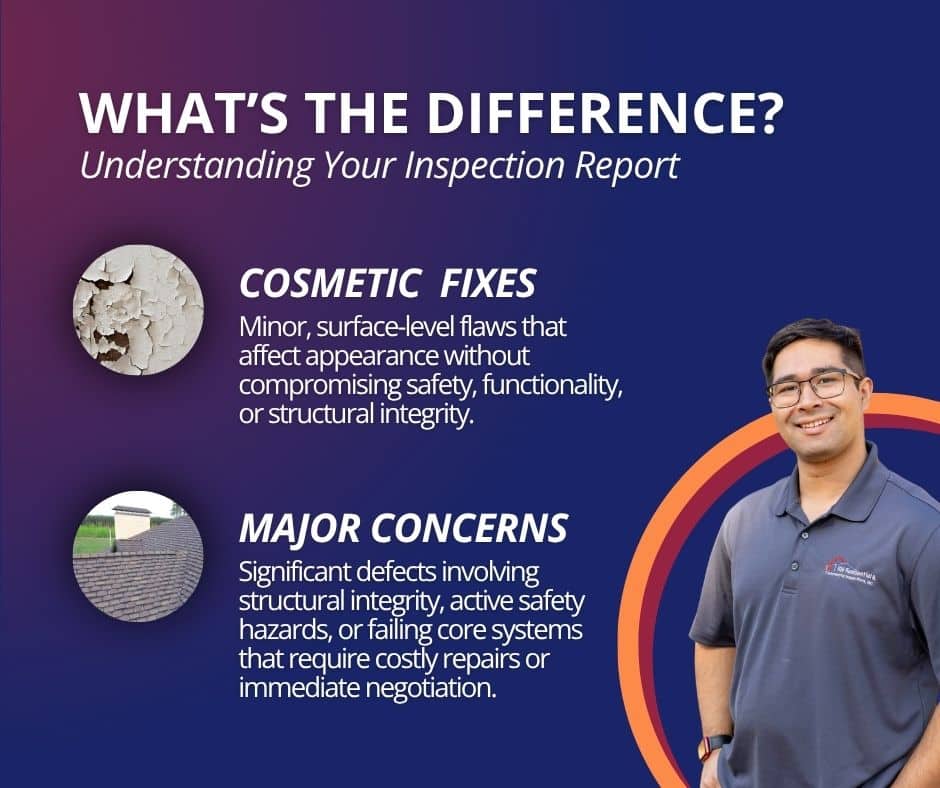
Home inspection findings range from simple cosmetic fixes to major structural concerns. Here are the 11 most frequent defects we uncover, along with what to look out for and what they typically cost to fix.
| # | Defect | Typical Warning Signs | Cost to Address |
| 1 | Foundation settling | Diagonal cracks, sloping floors, sticking doors | Low – High |
| 2 | Poor grading/drainage | Water pooling near foundation, damp crawl space | Low |
| 3 | Crawl space moisture/wood rot | Standing water, mineral deposits, visible decay | Moderate – High |
| 4 | Mold/air quality | Musty odor, visible growth, water stains | Low – Moderate |
| 5 | Elevated radon | None visible (test required) | Low |
| 6 | Composition board siding | Swollen/soft panels, delamination | Moderate – High |
| 7 | Aging HVAC | Short cycling, uneven temps, frequent repairs | High |
| 8 | Aging/damaged roof | Missing shingles, granule loss, damaged flashing | High |
| 9 | Polybutylene plumbing | Gray/blue/black flexible pipe, built 1978–1996 | Moderate |
| 10 | Federal Pacific panels | “Stab-Lok” panel, built 1950s–1980s | Moderate |
| 11 | Unpermitted DIY work | Uneven quality, non-standard wiring/plumbing | Moderate – High |
Cost tiers are general and vary by scope. You should get a quote for anything on this list before budgeting a number.

Structural and Drainage Defects
In the Charlotte area, seasonal weather and heavy local clay make structural and drainage issues particularly common. Here is how soil movement and poor drainage threaten a home’s foundation.
Foundation Settling and Soil Movement
Charlotte’s clay soil expands when wet and shrinks when dry, which causes homes to settle unevenly over time.
Common signs, roughly in order of severity:
- Small drywall cracks or minor stair-step cracks in brick veneer (usually normal aging)
- Doors or windows that occasionally stick
- Larger diagonal cracks around openings
- Floors that noticeably slope, or doors and windows that stop working altogether (worth a closer look)
The International Association of Certified Home Inspectors defines a material defect as one with a significant, adverse impact on a property’s value or that poses a safety risk.
That’s the standard we use to decide what belongs in a report versus what’s routine wear.
Improper Grading and Poor Drainage
Water pooling near the foundation, soil erosion, or downspouts that empty right next to the exterior wall all send water toward the house instead of away from it. This shows up most often on sloped lots or where landscaping, like a flower bed built up against the foundation, has quietly redirected water over time.
Correcting grading early with regrading, downspout extensions, or a drainage system is almost always cheaper than repairing the foundation or crawl space damage that follows.
Moisture, Mold, and Air Quality Defects
Charlotte’s humid climate makes indoor moisture issues uniquely common and fast-acting. When water sits unaddressed below or inside a home, it creates a quick chain reaction that affects everything from floor joists to indoor air quality.
High Crawl Space Moisture and Wood Rot
Charlotte’s hot, humid summers make this one of the most common findings we report.
Warning signs include:
- Standing water or damp, sagging insulation
- White mineral deposits on masonry walls
- Visible wood decay or fungal growth
To go beyond visual warning signs, inspectors use moisture meters to measure the exact risk level in your home’s framing:
| Wood Moisture Level | Risk Category | What It Means |
| 12% – 15% | Low Risk | Typical baseline; acceptable range |
| 16% – 19% | Elevated | Moisture build-up detected; worth monitoring |
| 20%+ | High Risk | Active concern for wood-decay fungi and structural rot |
Moisture and structural signs tend to travel together no matter which part of the country you’re in, which matches what we see locally.
Mold and Indoor Air Quality Concerns
Musty odors, visible mold growth, water stains on ceilings or walls, and unusually high indoor humidity usually mean moisture has been sitting somewhere, most often a crawl space, attic, or an under-ventilated bathroom.
Not all growth is equally serious: surface mold on a joist is typically cosmetic once the moisture source is fixed, while dark, soft, or crumbling wood points to structural rot that needs framing repair, not just cleaning.
Elevated Radon Levels
Radon can’t be seen or smelled, so testing is the only way to know if a home has it. The EPA sets its action level at 4.0 picocuries per liter, and homes with crawl spaces or basements, a large share of Charlotte-area homes, can run somewhat higher simply because of how the foundation is built. Mitigation systems are generally effective and don’t require major disruption to install.
Exterior and System Defects
From protective siding to core mechanicals, these high-impact components bear the brunt of Charlotte’s climate and are among the most costly findings on an inspection report.
Composition Board Siding Deterioration
Composition board, also called hardboard siding, was widely installed on Charlotte homes in the 1980s and 1990s. It holds up fine when paint, caulking, and flashing stay maintained, but it’s vulnerable once moisture gets past those barriers:
- Swollen or soft panels
- Layers separating (delamination)
- Rot around windows, doors, and roof intersections, especially near the ground or anywhere sprinklers hit the siding
A quick field test: check the bottom edge or a butt joint. Hardboard shows a brown, fibrous color inside and damages in a layered, “broomed” pattern. Fiber cement, by contrast, doesn’t swell, rot, or delaminate the same way.
Aging HVAC Systems
Charlotte’s long cooling season puts real demands on an air conditioning system. Signs a unit is past its service life include short cycling, uneven temperatures room to room, and a repair history that keeps growing.
Replacement is a high cost, especially if ductwork changes are needed too, which is why we always note system age and condition on an inspection report.
Aging or Damaged Roof Systems
Missing or curling shingles, heavy granule loss, and damaged flashing around chimneys and vents are the most common roof findings after Charlotte’s thunderstorms, high winds, and occasional hail.
Small roof problems rarely stay small. They tend to turn into interior water damage if nobody addresses them, which puts roof condition high on the cost list.
Plumbing, Electrical, and Renovation Defects
Hidden behind walls and inside service panels, these critical utility systems and past remodeling projects can conceal major safety hazards, outdated materials, and expensive code violations.
Polybutylene Plumbing
Homes built between 1978 and 1996 sometimes used polybutylene, a flexible gray, blue, or black plastic water supply pipe. You’ll typically find it near the water heater, in the crawl space, or coiled under sinks.
Many systems still work fine, but the material has a documented history of premature failure as water-treatment chemicals break it down from the inside, often with no warning before a leak. Some homeowners monitor and replace sections as problems come up; others re-pipe proactively with PEX or copper.
Federal Pacific Electrical Panels
Homes built mainly between the 1950s and 1980s sometimes have a Federal Pacific Electric “Stab-Lok” panel. These have drawn significant industry concern over reports that some breakers may fail to trip during an overload, raising the risk of an electrical hazard.
Faulty DIY Renovations and Unpermitted Work
Charlotte’s competitive housing market has driven a lot of renovation activity, and not all of it was done by licensed professionals or with the right permits.
The signs:
- Uneven construction quality
- Non-standard electrical or plumbing work
- Additions that don’t quite match the original structure
Correcting unpermitted work often means redoing it entirely to meet current codes, usually more expensive than doing it right the first time.
Related Questions to Explore
- What is the biggest red flag during a home inspection? Structural issues, active water intrusion, and significant safety hazards, since they’re the most expensive to fix and affect the home in the long term.
- Should I walk away from a house after a bad inspection? Not necessarily. Many findings can be resolved through repairs, seller concessions, or a price adjustment once you understand the real severity and cost.
- Are crawl space problems common in Charlotte? Yes. The region’s humidity and rainfall make crawl space moisture one of the most common findings here.
- Is radon a concern in Charlotte? Yes. Levels vary regardless of location within North Carolina, and testing is the only way to confirm whether a specific home is affected.
- Which home inspection defects are usually the most expensive? Foundation, roof, HVAC, siding, crawl space, and major plumbing replacements are typically the costliest. Catching them early gives buyers leverage to negotiate repairs or credits before closing.
When to Call a Professional
Cosmetic cracks, a slightly aging roof, or a stain from an old, already-fixed leak usually don’t need an emergency call. Active water intrusion, structural movement, exposed wiring, or anything affecting a safety system should get a professional opinion right away.
Whether you’re buying a historic home or a newer property, a full home inspection is the fastest way to see all 11 defect categories in one visit instead of discovering them one at a time after closing. We serve homeowners and sellers across Plaza Midwood, Dilworth, Myers Park, Ballantyne, Steele Creek, and South End.
Conclusion
Most home inspection defects fall into a handful of categories: structural, moisture-related, exterior, and systems, and Charlotte’s climate and soil make some of them more common here than elsewhere.
- Foundation movement, crawl space moisture, and drainage issues are the region’s most frequent findings, largely because of local clay soil and humidity.
- Aging systems (HVAC, roofing, electrical panels, polybutylene plumbing) are worth budgeting for even when they’re still technically functioning.
- A thorough home inspection in Charlotte, NC is what turns “hope it’s fine” into an actual answer before you close.
If you’re preparing to buy, sell, or just want a clear picture of where your home stands, schedule an inspection with AHI Residential & Commercial Inspections. We’ll give you a detailed, easy-to-understand report you can actually use.