In short: Is the housing market Charlotte NC heading for another 2008? See current rates, home prices, and what it means for buyers and sellers.
📅 October 28, 2026 • ⏱️ 10 min read
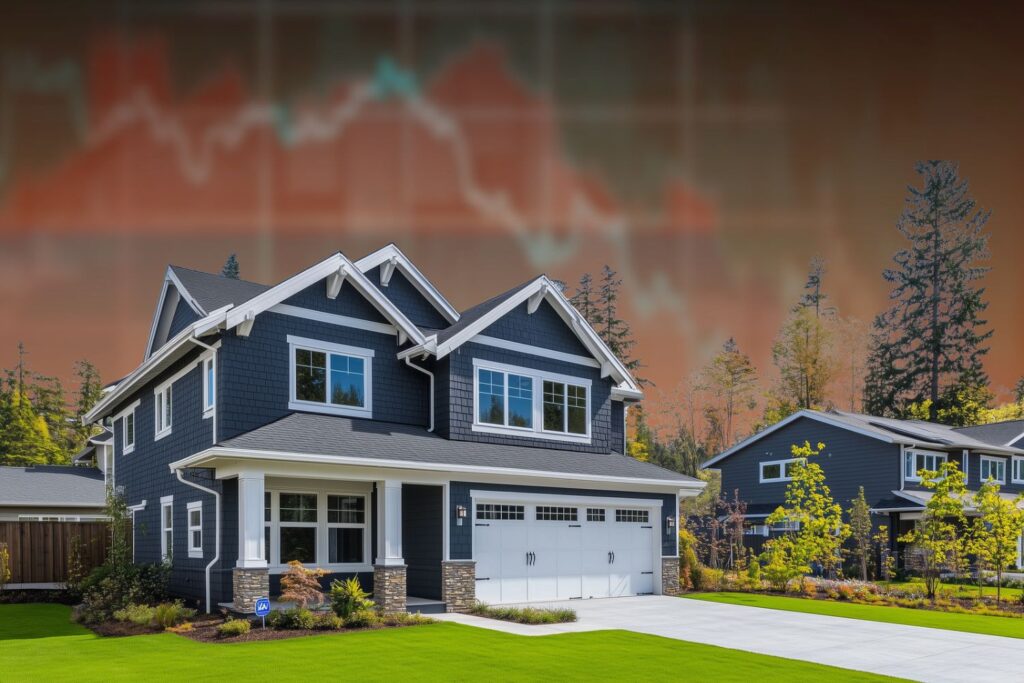
The Charlotte, NC housing market is slowing down, but it is not heading for another 2008. As a home inspection company that worked through the 2008 housing crisis, one question kept lingering for us: how strong is the Charlotte housing market, really?
No, the Federal Reserve is not trying to crash the housing market. Higher rates have cooled sales, though, and in a slower market, the home inspection is your best source of leverage. Here is what the numbers mean for the housing market Charlotte NC, and for buyers and sellers in the surrounding region.
Where Mortgage Rates & Home Prices Stand
Rates are up sharply, but prices are holding steady, both nationally and here in the Charlotte region. On September 16, 2026, the Fed raised its benchmark rate for the first time since 2023, and the average 30-year fixed rate hit 7.28% on October 1, its highest level since late 2023.
- Median sale price (August 2026): $427,500 in the 16-county Charlotte region, up 0.6% from a year ago (Canopy via Hoodline). Nationally, it was $429,100, up 1.6% (NAR).
- Homes for sale: 13,574 in the Charlotte region, up 7.1%.
- Months of supply: 3.7 months in the Charlotte region and 4.9 months nationally.
- Closed sales vs. a year ago: Down 8.7% in the Charlotte region and down 1.2% nationally.
In plain terms: fewer people are buying, more homes are sitting on the market, and buyers have more room to negotiate than they did a year ago. But prices have not dropped. A market that is slowing down is not the same as a market that is crashing.
What the Fed Is Really Doing
The Fed raised rates in September to fight inflation, not to punish housing. It voted 12-0 to lift the federal funds rate a quarter point to a range of 3.75% to 4.00%, citing inflation above its 2% target and higher energy prices
- The mandate is economy-wide. Congress gave the Fed a dual mandate: maximum employment and stable prices. Housing is not a separate target.
- Housing feels it first. Housing runs on borrowed money, so higher borrowing costs hit it faster and harder than most industries.
- The Fed doesn’t set your mortgage rate directly. Mortgage rates track the 10-year Treasury yield, which moves on inflation expectations and investor demand.
- The stated aim is a soft landing. Officials project one more increase this year, then holding steady in 2027 and cutting in later years.
Why Today Is Structurally Not 2008
Affordability is tight, but the conditions that caused the 2008 collapse are largely missing today.
- Lending: In 2008, subprime and “no-doc” loans were common. Today, ability-to-repay rules require verified income, credit checks, and underwriting.
- Homeowner equity: In 2009, negative equity peaked at 26% of mortgaged homes. Today, only 1.9% are underwater, and the average owner with a mortgage has about $310,500 in equity (Cotality).
- Owners’ mortgage rates: About 78% of mortgages are below 6%, and nearly half are at 4% or less (CalculatedRisk on FHFA data).
- Housing supply: In 2008, the market was overbuilt. Today, the U.S. is short an estimated 4 million homes.
An honest caveat. Foreclosures are rising. Filings were up 21% nationally in the first half of 2026 (ATTOM). But that increase is coming off historically low post-pandemic levels and remains far below 2008-era levels.
Rate Lock-In and What It Means for Buyers
Today’s slowdown is a side effect of higher rates colliding with too few homes, not a crash in the making. Most owners locked in low rates years ago, and trading a 3% or 4% mortgage for one above 7% can add hundreds of dollars a month to the same-priced house. So many of them stay put, which keeps listings low and prices up.
You don’t have to wait for rates to fall to buy, but you do need a plan for the payment. Common strategies include:
- Seller-paid concessions: Ask the seller to cover closing costs or fund a rate buydown. More sellers agree when homes sit longer.
- Permanent rate buydown: You or the seller pay points up front to lower the rate for the life of the loan.
- Assumable FHA or VA loan: Take over a seller’s older, lower-rate loan, if the lender approves you.
- Adjustable-rate mortgage (ARM): A lower starting rate for 5 to 7 years, then your payment can rise.
- Down payment assistance: Check the NC Housing Finance Agency and local programs for eligibility.
- Widen the search: Townhomes, condos, and nearby counties often cost less than single-family homes in the core.
Make sure you can comfortably afford the payment you’re signing up for today, with room left over for repairs and maintenance. That last part is where a home inspection comes in.
Why a Home Inspection Matters More in This Market
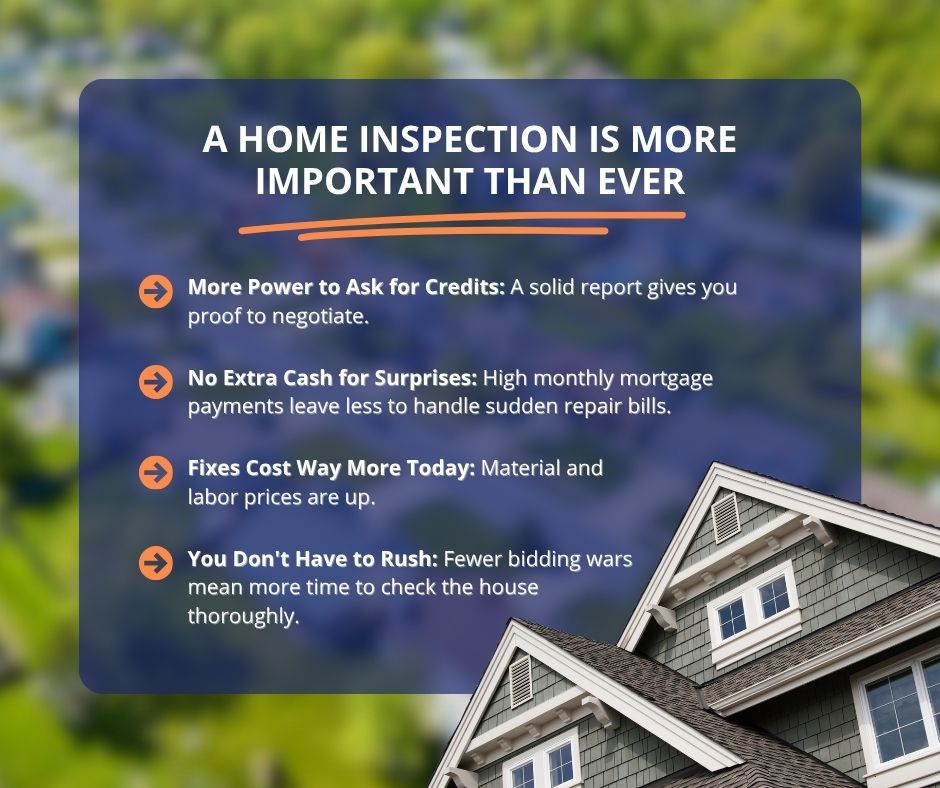
When rates are above 7% and repair costs keep climbing, a missed defect hits your budget twice. You’re already paying more each month for the mortgage, so there’s less cash left for a surprise repair after closing.
Repairs themselves have gotten more expensive:
- Materials are up. NAHB reported a median 6.7% rise in material costs over the past year, and tariffs of up to 50% apply to steel, aluminum, and some copper imports.
- Labor is up. Specialty trade contractor wages rose about 5% from May 2025 to April 2026, and most contractors report trouble finding qualified workers.
- Big systems are pricey. A full HVAC replacement now runs roughly $5,000 to $28,000 nationally, with typical homes in the $7,000 to $20,000 range. Roofs, water heaters, electrical panels, and foundation repairs have climbed too.
Put that next to the cost of a home inspection, usually a few hundred dollars, and the math is simple. One finding on the roof, HVAC, plumbing, electrical, or structure can more than pay for the inspection through a repair request, a price credit, or a decision to walk away. See what home inspectors commonly find in NC homes for examples.
The slower market works in your favor.
With 3.7 months of supply in the Charlotte region and sales down 8.7% from a year ago, sellers are more willing to negotiate. A detailed inspection report gives you documented reasons to ask for repairs or credits instead of guessing.
Builder Rate Deals Need an Independent Inspection Too
With resale buyers pulling back, builders are working hard to move homes. In September, 66% of builders were offering sales incentives and 38% cut prices, by an average of 6%. Many advertise low temporary rates through buydowns, but those deals come with trade-offs.
A 2-1 temporary buydown steps the rate up each year. Here is what it looks like on a $400,000 loan at today’s 7.28% average rate (principal and interest only):
| Period | Rate | Monthly payment |
| Year 1 | 5.28% | $2,216 |
| Year 2 | 6.28% | $2,471 |
| Year 3 and after | 7.28% | $2,737 |
That’s a $521-a-month increase by year three. If you can only afford the year-one payment, the deal is risky. Other risks to weigh:
- You may be overpaying for the house. Instead of cutting the price, the builder spends that money on your rate, which can mean less equity on day one.
- Less freedom to shop. If the incentive requires the builder’s lender, you can’t easily compare fees and terms.
- Refinancing isn’t guaranteed. A temporary buydown assumes rates will fall, and the Fed is still raising them.
A price cut or a permanent buydown is often the better long-term deal than a short-term teaser rate. Run the numbers both ways with a lender you choose, and ask the builder:
- Is the rate buydown temporary or permanent, and what is the payment in each year?
- Would you lower the price instead, and by how much?
- Do I have to use your lender, and what are the total closing costs?
- Will you allow my own independent inspector on site during construction and before closing?
New homes need inspections too. A brand-new house can still have missing insulation, poorly flashed windows, loose roof shingles, plumbing leaks, or electrical mistakes. Builders’ own checks and city code inspections look at minimum standards, not workmanship quality.
Ask your inspector about a pre-drywall inspection, a final inspection before closing, and an 11-month warranty inspection before your builder warranty runs out.
What This Means for Charlotte Buyers and Sellers
A slower market gives Charlotte-area buyers something they haven’t had in years: time and leverage.
For buyers:
- Use the extra time to look closely. With less pressure to waive contingencies, keep your inspection contingency in the contract.
- Let the inspection report guide your negotiation. A documented roof, HVAC, or foundation concern is a strong basis for a repair request or price credit.
- Ask your lender about rate buydowns or seller-paid concessions, which are more common when homes sit longer.
For sellers: Buyers have choices now, so condition matters more. A pre-listing inspection lets you find and fix issues before they derail a deal. National data supports this indirectly:
- Inspections are the top reason deals fall apart. In HomeLight’s Q3 2025 survey of more than 800 top agents, major problems found in the inspection accounted for 27% of failed pending sales, more than any other cause.
- Some deals do fall through. About 5% of pending sales fall through, according to NAR’s April 2026 Realtors Confidence Index. Other sources report higher rates because they measure cancellations differently.
- Agents are recommending pre-listing inspections. NAR’s own magazine reported in July 2025 that agents are turning to them to prevent canceled contracts. The evidence was agents’ experience, not measured results.
Related Questions to Explore
- Is the Charlotte housing market crashing? No. Sales are down 8.7% from a year ago, and inventory is up 7.1%, but the region’s median price is still up 0.6%. Today’s lending rules, homeowner equity, and housing shortage look very different from 2008.
- Is the Fed trying to crash the housing market? No. The Fed raised rates on September 16, 2026, to bring inflation back toward its 2% target. Housing feels higher rates first because it runs on borrowed money.
- Are home prices going down in Charlotte? Not yet. The Charlotte region’s August median sale price was $427,500, up 0.6% from a year ago, and the year-to-date median is $430,000, up 0.8%.
- Is it a good time to buy a house in Charlotte, NC? It can be, with a plan for the payment. Buyers have more time and leverage than a year ago. Compare seller-paid concessions, rate buydowns, and assumable loans, and keep your inspection contingency.
- Should I skip the home inspection in a slower market? No. With rates above 7% and repair costs climbing, a missed defect is more expensive than ever. A detailed report also gives you documented reasons to ask for repairs or credits.
When to Call a Professional
A lender can help you with the payment. An independent inspector can tell you what the house itself will cost you. Call a licensed inspector when:
- You are about to make an offer or are inside your due-diligence period
- You are buying new construction and want a pre-drywall inspection, a final inspection before closing, and an 11-month warranty inspection
- A builder offers a rate deal, and you want an independent set of eyes on the home
- You are selling and want a pre-listing inspection to find issues before they derail a deal
Conclusion
Whether you’re buying new construction or a resale home, an independent inspection is one of the least expensive ways to protect a purchase this large.
- The Charlotte housing market is slowing, not crashing.
- Today’s rates are high, but lending standards, equity, and supply are very different from 2008.
- A detailed inspection gives you leverage in a market where sellers are more willing to negotiate.
At AHI Residential and Commercial Inspections, our inspectors have helped buyers and sellers across Charlotte, Mooresville, Lake Norman, and the surrounding counties for more than two decades. Whether you’re buying, selling, or just planning ahead, we’ll give you a clear, detailed picture of the home.
Ready to schedule? Book online or call today!