
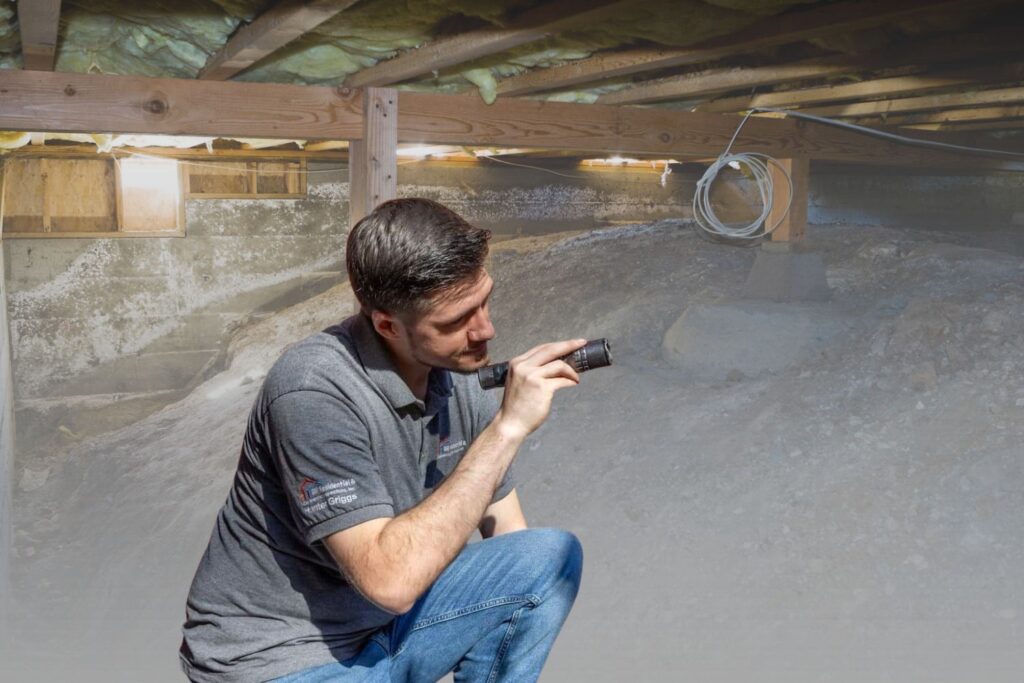
Moisture in a crawl space is a common problem in North Carolina homes, and the state’s high humidity makes mold a top concern for local home buyers. In the Charlotte, NC region, heavy summer air can raise moisture levels beneath a home and turn the crawl space into an unintentional greenhouse.
Knowing how crawl space moisture works, how to budget for repairs, and what to ask your inspector helps protect your investment before you sign a closing contract. Here is what AHI Residential & Commercial Inspections wants every buyer and homeowner to know about having mold and moisture in crawl space.
How to Read Moisture Levels in a Crawl Space
Home inspectors measure moisture in a crawl space with a moisture meter. The meter reads the wood moisture content (WMC) of structural framing. Here is how to read the numbers:
- 12% to 15% (Normal): This is the ideal baseline for North Carolina homes.
- 16% to 19% (Elevated): This range indicates borderline moisture that requires monitoring or improved ventilation.
- 20% or higher (Action Required): Wood becomes susceptible to wood-decay fungi, and mold spores begin to germinate actively.
High readings mean the crawl space lacks adequate vapor barriers, proper drainage, or sufficient ventilation to combat NC’s outdoor humidity.
What Causes Moisture in a Crawl Space?
Moisture in a crawl space usually comes from a handful of repeat sources: bare soil, humid outdoor air, leaks, and poor drainage. A good inspector checks each one.
- Bare or poorly covered soil: Without a vapor barrier that covers 100% of the ground, moisture evaporates from the soil into the crawl space.
- Humid outdoor air: North Carolina’s summer humidity can overwhelm a crawl space that lacks proper ventilation or sealing.
- Plumbing leaks: Active leaks from the bathrooms or kitchen can drip straight into the crawl space.
- HVAC problems: An AC condensate line that is uninsulated, cracked, or clogged with algae can overflow into the crawl space. Older, under-insulated ducts (like R-4 or R-6 lines) can “sweat” when hot, humid air hits their cold surfaces.
- Poor drainage: Yard grading or gutter downspouts that send rainwater toward the foundation walls can leave standing water or staining on the block.
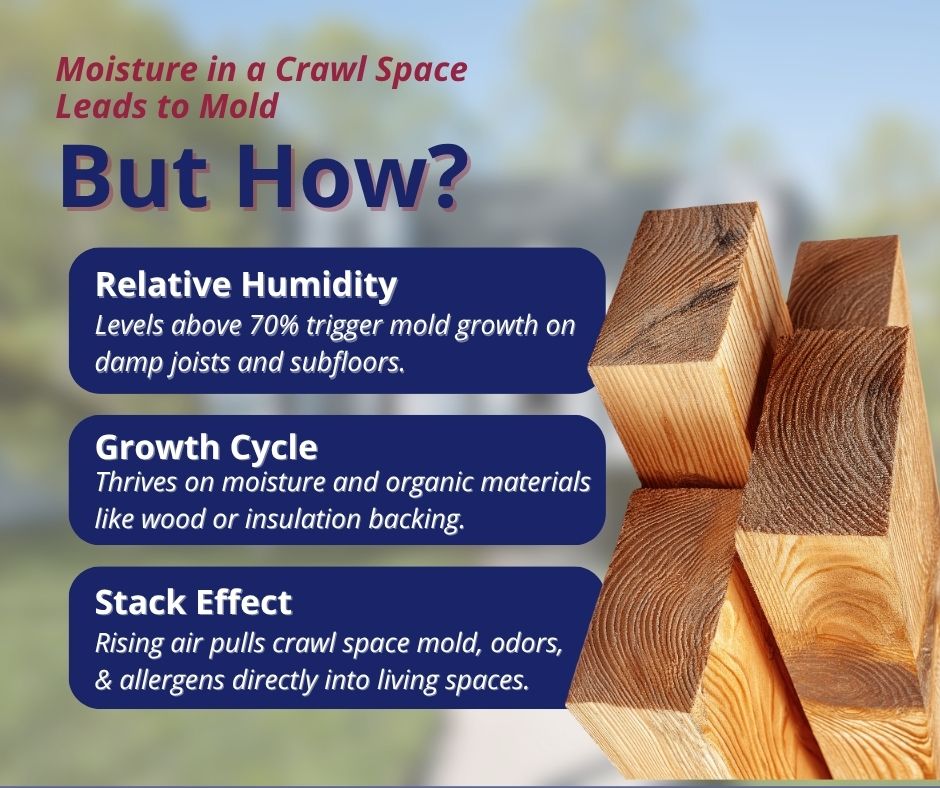
How Moisture in a Crawl Space Leads to Mold
Mold spores exist everywhere in the natural environment but remain dormant without moisture. When a crawl space stays damp, those spores wake up and grow.
- Relative humidity: When crawl space relative humidity consistently stays above 60%, mold spores attach to damp floor joists and subflooring.
- Growth cycle: Mold requires organic food (like wood or paper backing on insulation) and moisture to thrive.
- The stack effect: Warm air rises through the home, pulling up to 50% of the air you breathe directly from the crawl space. This process brings mold spores, musty odors, and allergens into your living spaces.
Surface Mold vs. Structural Rot
Not all fungal growth under a house carries the same level of risk. Buyers must understand the distinction between cosmetic issues and structural threats.
Surface Mold
- Appearance: Powdery white, green, brown, or black spots appear on the outside of the joists.
- Impact: It does not weaken wood fibers. NC State Extension also notes that mold or mildew on joists does not mean wood decay will occur.
- Fix: It is easily cleaned with a topical antimicrobial treatment, provided the source of moisture is eliminated.
Severe Structural Rot
- Appearance: Wood looks dark, wet, blistered, or crumbles to the touch (caused by wood-decay fungi). Wood-decay fungi often show a root-like, tree-branch pattern in the wood.
- Impact: It destroys the structural integrity of the floor joists and main support beams.
- Fix: It requires expensive sistering or replacement of structural lumber, alongside total moisture remediation.
Crawl Space Moisture Solutions and Charlotte Remediation Costs
If a home inspection reveals moisture in the crawl space, you can negotiate several remediation strategies with the seller. Costs vary across the Charlotte metro area based on home size and damage severity:
| Service Needed | Typical Charlotte Cost Range | What It Covers |
| Mold Remediation | $1,500 to $5,500 | Killing and physically removing surface mold using antimicrobials or media blasting. |
| Standard Vapor Barrier | $2,000 to $5,000 | Laying a fresh 6-mil to 10-mil plastic liner over the dirt floor to stop soil evaporation. |
| Drainage Systems | $4,000 to $15,000+ | Installing interior French drains and heavy-duty sump pumps to handle standing water. |
| Full Encapsulation | $8,000 to $20,000+ | Completely sealing vents, wrapping walls and floors in 10 to 20 mil plastic, and adding a commercial dehumidifier. |
| Structural Wood Repair | $1,500 to $15,000+ | “Sistering” or replacing rotten floor joists and main support beams damaged by wood-decay fungi. |
Questions to Ask Your Inspector
A general home inspector provides a broad overview, but you want to press for specific details regarding crawl space health. Use these exact questions during your inspection period:
On Moisture and Mold Identification
- What was the highest wood moisture content (WMC) reading, and where was it located? (Look for anything 16% or higher, which signals active risk for mold growth, depending on humidity levels in the crawl space.)
- Is the fungal growth purely surface cosmetic mold, or is there evidence of wood-decay fungi causing structural rot? (Once levels tick above the 19% to 20% threshold, you are entering the danger zone for rot, mold, and structural damage. Moisture levels of 25% or higher indicate deeply saturated wood.)
- Did you find any signs of active or past standing water, such as staining on the foundation block walls?
On Current Systems and Infrastructure
- Is the current vapor barrier providing 100% coverage, and what is its thickness? (Charlotte homes need total ground coverage to fight high soil moisture evaporation.)
- Are there any active plumbing leaks from the bathrooms or kitchen dropping into the crawl space?
- Do you see signs of HVAC risks under the house, specifically:
- Condensate line issues: Is the AC condensate line uninsulated, cracked, or clogged with algae, causing water to overflow directly into the crawl space?
- Ductwork “sweating”: Is hot, humid air hitting cold, under-insulated duct surfaces (like older R-4 or R-6 lines) and creating heavy exterior condensation?
On Long-Term Solutions
- Is the exterior yard grading or gutter downspout system forcing rainwater toward the foundation walls?
- In your professional opinion, will basic ventilation fixes resolve this, or does this property require a structural drainage system or full encapsulation?
- Did you observe a 3-inch termite inspection gap at the top of the foundation wall and sill plate? (This is crucial for meeting North Carolina pest control regulations if encapsulation is ultimately performed.)

Related Questions to Explore
- What is a normal humidity level in a crawl space? Keep relative humidity below 70%, the point where mold spores attach to damp joists. Wood moisture of 12% to 15% is the healthy baseline.
- Is moisture in a crawl space dangerous? It can be. Damp conditions feed mold, and the stack effect pulls spores, musty odors, and allergens into your living space. Constant moisture can also rot floor joists and support beams.
- How do you fix moisture in a crawl space? Stop the source first: repair plumbing and AC condensate leaks, fix yard grading and downspouts, and cover the soil with a vapor barrier. If readings stay high, add drainage or full encapsulation with a dehumidifier. Closed, conditioned crawl spaces outperform vented ones in humid regions.
- Does a vapor barrier stop moisture in a crawl space? It stops soil moisture, but only if it covers 100% of the ground. A 6-mil to 10-mil liner handles the soil. Full encapsulation also seals the vents, wraps the walls and floor in 10 to 20 mil plastic, and adds a dehumidifier.
- How much does it cost to fix moisture in a crawl space? In the Charlotte area, costs run from about $1,500 for surface mold removal to $20,000 or more for full encapsulation. Home size and damage severity set the final price. See the cost table above for each service.
When to Call a Professional
Some crawl space moisture can be handled with a cleaning and a better vapor barrier. Other problems need a trained eye. Call a professional if you notice any of these:
- Wood moisture readings of 20% or higher
- Wood that looks dark, wet, or blistered, or that crumbles to the touch
- Standing water, or staining on the foundation block walls
- Active plumbing leaks or an overflowing AC condensate line
- Musty odors or allergy symptoms inside the living space
If you are buying a home, bring these concerns up during your inspection period, while you still have room to negotiate repairs with the seller.
Conclusion
Moisture in a crawl space is easier and cheaper to deal with before closing than after. Keep these points in mind:
- Wood moisture of 12% to 15% is normal. Readings of 20% or higher call for action.
- Surface mold is cosmetic, but structural rot is expensive to repair.
- Ask your inspector the specific questions above before your inspection period ends.
Ready to know what is under your next home? Schedule your home inspection with AHI and get clear answers about the crawl space before you buy.