In short: Unless you've lived in a home or area with hard water before, you may not catch the common signs that your home has it. Here's what to know.
📅 March 4, 2026 • ⏱️ 8 min read
Spots on your dishes. Crusty buildup around your faucets. Skin that feels dry no matter how much you moisturize. These are not random annoyances. They are some of the clearest signs that your home has hard water.
Hard water is extremely common in the Charlotte area, and most homeowners do not think about it until the damage has been quietly building for years. It is not a health emergency, but it is not harmless either. Left unchecked, it wears down your plumbing, your appliances, and your wallet.
Here is what to look for, how to test it, and what you can do about it.
What Is Hard Water?
Hard water contains high levels of dissolved minerals, mainly calcium and magnesium. These minerals get picked up as water travels through soil and rock before reaching your well or municipal supply.
Hardness is measured in grains per gallon (GPG). The higher the number, the harder the water.
| Hardness Level | Grains Per Gallon (GPG) |
| Soft | Less than 1 |
| Slightly Hard | 1 to 3.5 |
| Moderately Hard | 3.5 to 7 |
| Hard | 7 to 10.5 |
| Very Hard | Over 10.5 |
Homes in areas like Mooresville, Statesville, and Troutman that rely on private wells tend to see higher mineral levels due to the surrounding geology.
Signs You Might Have Hard Water
You can usually spot hard water through everyday clues before you ever run a test.
Scale Buildup on Fixtures
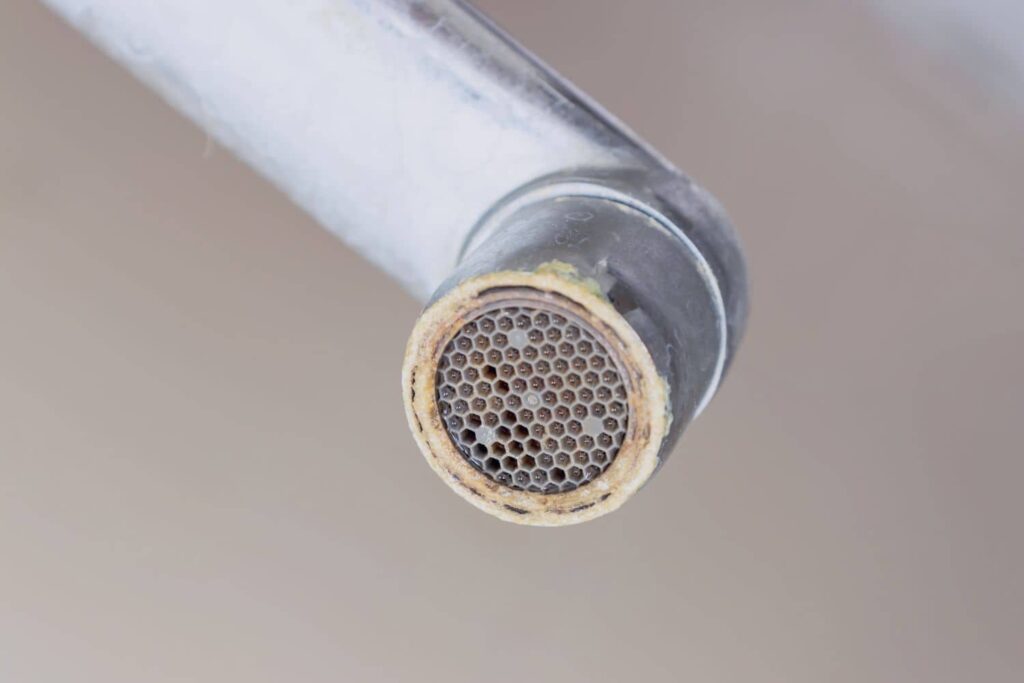
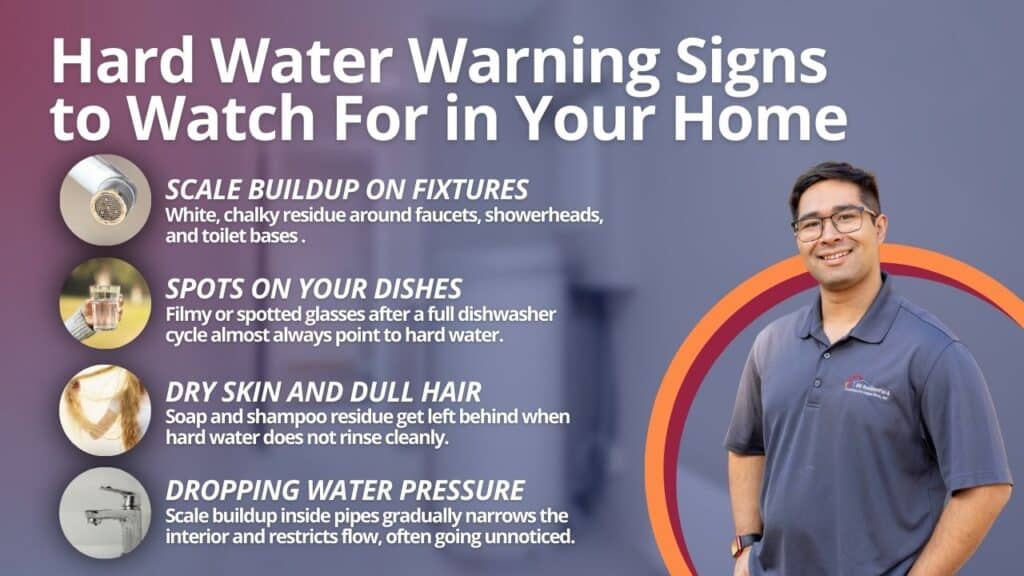
White, chalky residue around faucets, showerheads, and toilet bases is called limescale. It forms when hard water evaporates and leaves minerals behind. If your showerhead is partially clogged or your faucet aerators keep getting gunked up, that is mineral buildup.
The same thing happens inside your water heater and appliances. You just cannot see it until problems develop.
Spots on Dishes and Glassware
Filmy or spotted glasses after a full dishwasher cycle almost always point to hard water. The spots are left behind after the water dries, and the minerals stay on the surface. No amount of rinse aid fully fixes it if the water itself is the issue.
Dry Skin and Dull Hair
Hard water does not lather or rinse as cleanly as soft water. Soap and shampoo residue get left behind on your skin and hair. If you feel dry and tight after every shower or your hair looks dull no matter what products you use, your water may be worth testing.
Stiff or Faded Laundry
Clothes washed in hard water often come out feeling rough or scratchy. Colors fade faster. Minerals get trapped in fabric fibers over time. If your towels feel like sandpaper or your whites look dingy, hard water is a likely cause.
Dropping Water Pressure
Gradual, unexplained drops in water pressure can mean mineral deposits are building up inside your pipes. Scale slowly narrows the pipe interior and restricts flow. This one tends to sneak up on homeowners and gets more expensive the longer it goes unaddressed.
How to Test for Hard Water
Spotting the signs is a starting point. A test gives you real numbers.
At-home test strips are quick, and most hardware stores carry them. They can confirm whether hardness is present and give you a ballpark reading, but they have a significant limitation: they only test for hardness.
A professional water quality test covers the full picture. For homes on well water, this distinction matters a lot. A certified lab test checks hardness alongside bacteria, nitrates, lead, iron, pH, and other contaminants that have nothing to do with hardness but everything to do with whether your water is safe.
Many of those concerns have no taste, color, or smell. You would not know they were there without testing.
AHI offers well water testing as an add-on to any home inspection. Water samples are collected on-site and sent to a state-certified laboratory, with results covering the contaminants most relevant to Charlotte-area well water.
If you are buying a home with a private well, this is one of the most valuable services you can add to your inspection appointment.
[Visual idea: Simple Canva side-by-side comparing at-home test strip vs. professional water test, showing what each one checks for]
Why Charlotte-Area Homes See Hard Water
The Charlotte metro and surrounding Piedmont region sit on a mix of granite and metamorphic rock. As groundwater moves through that geology, it picks up calcium and magnesium naturally.
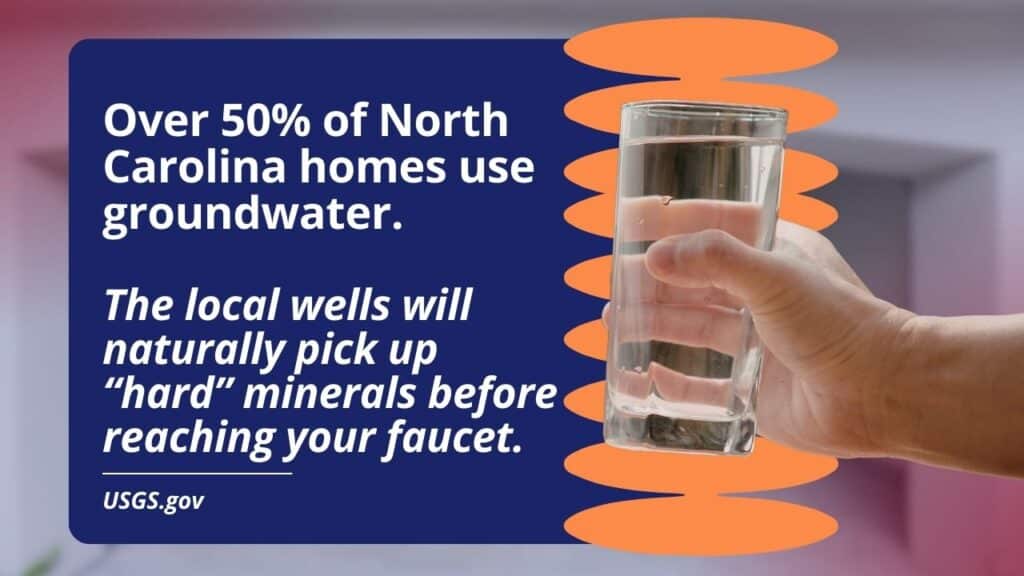
Homes on well water are more likely to encounter hardness because the water is in direct contact with that mineral-rich bedrock. But even homes on municipal water can experience moderate hardness depending on the treatment source and local infrastructure.
If you are in a more rural community outside Charlotte, like parts of Cabarrus or Iredell County, well water is common, and testing is worth making a priority.
What Hard Water Does to Your Home Over Time
The costs of hard water are gradual but real.
- Water heaters: Sediment collects at the bottom of the tank, making the unit work harder. A heater that should last 10 to 12 years may fail in 7 or 8.
- Pipes: Scale buildup restricts flow and puts stress on joints and fittings over time.
- Appliances: Dishwashers and washing machines wear out faster and clean less effectively.
- Surfaces: Tile grout, sink basins, and tub finishes develop staining and buildup that is hard to fully remove once it sets.
What to Do About Hard Water
The right solution depends on how hard your water is, whether you are on a well or city supply, and how much of the home you want to treat.
Water Softeners
The most common fix. A whole-home water softener uses ion exchange to swap calcium and magnesium for sodium.
The result is water that does not leave scale, lathers better, and is easier on your plumbing and appliances. These systems need regular salt and occasional servicing, but they are highly effective.
Salt-Free Conditioners
These do not remove minerals but change their structure so they are less likely to stick to surfaces and form scale. A good fit for homeowners who want low maintenance or prefer to avoid sodium in their water.
Reverse Osmosis Filters
Installed under the sink, these systems remove minerals and a wide range of other contaminants from your drinking and cooking water. Often paired with a whole-home softener for a more complete setup.
Short-Term Fixes
If a full system is not in the budget right now, these help in the meantime:
- Inspection dissolves limescale on fixtures and showerheads
- Citric acid cleaners work well inside dishwashers
- Rinse aid reduces spotting on dishes and glassware
These manage the symptoms but do not address the source.
Other Questions Homeowners Ask
What is the difference between a home inspection and a water quality test?
A standard home inspection covers the visible and accessible components of a home, including plumbing, fixtures, water heaters, and other systems. It can flag signs of mineral buildup or water-related wear, but it does not measure what is in the water.
Well water testing is a separate service that sends samples to a certified lab and gives you data on specific contaminants and mineral levels.
Is radon something Charlotte homeowners need to think about?
Yes. Radon is a colorless, odorless radioactive gas that enters homes through foundation cracks and openings. It is the second leading cause of lung cancer according to the EPA, and North Carolina homes are not immune.
The only way to know if radon is present is to test for it. Like water testing, radon testing is an ancillary service that can be added to a home inspection.
What should buyers know about homes with private wells?
Homes on private wells require the homeowner to take full responsibility for water quality. Unlike municipal water, private well water is not regularly tested or treated by any outside agency.
Buyers purchasing a home with a well should always include a water quality test as part of the inspection process, especially if the home is in a more rural community like parts of Iredell, Lincoln, or Cabarrus County.
When to Call a Professional
If you are buying a home in the Charlotte area that uses well water, a professional water quality test before closing is one of the smartest steps you can take. It confirms hardness levels and screens for contaminants that a visual inspection alone cannot catch.
If you already own a home on a private well and have never tested the water, there is no better time. The problems hard water causes get more expensive the longer they go unaddressed, and other contaminants may be present with no obvious signs at all.
A licensed inspector can collect samples and have them analyzed through a certified lab, covering hardness, bacteria, nitrates, pH, iron, and other concerns common to the Charlotte region.
Explore Well Water Testing and Other Specialty Services We Offer:
Conclusion
Hard water is one of the most overlooked issues in Charlotte-area homes, but the signs are usually hiding in plain sight. Spotted dishes, scale on fixtures, rough laundry, dry skin after a shower. None of it is normal, and none of it has to be permanent.
If your home uses a private well, pairing a water quality test with your home inspection gives you a clear picture of exactly what is in your water.
AHI Residential & Commercial Inspections offers well water testing as an ancillary service throughout Charlotte and the surrounding communities. Schedule your inspection today!