
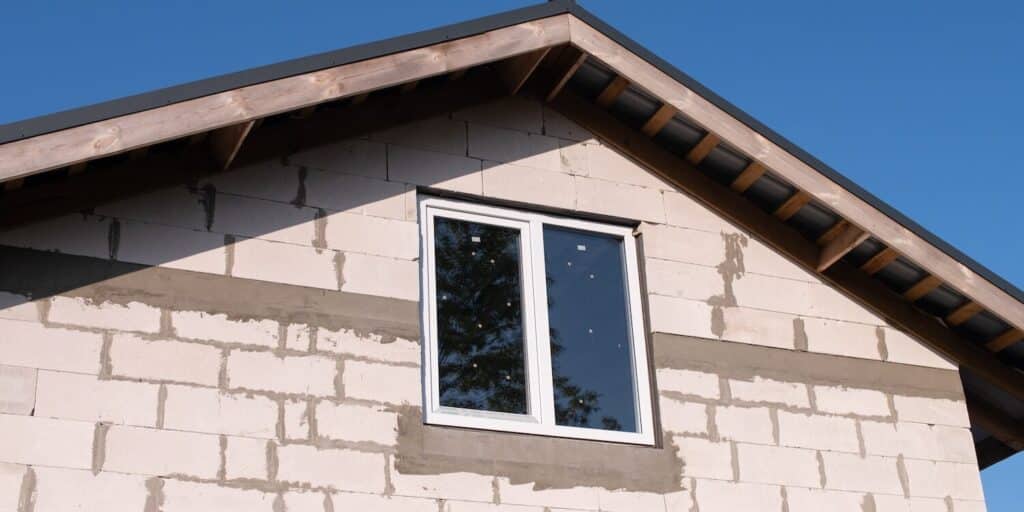
In short: Discover the most common window defects found in new construction homes in Charlott with AHI Residential and Commercial Inspections.
📅 February 6, 2025 • ⏱️ 8 min read
New construction homes are exciting. You picked the lot, chose the finishes, watched the framing go up, and finally got the keys. The last thing you expect is a problem with your windows. But here’s the reality: new construction windows are among the most commonly flagged components during inspections, and the Charlotte area is no exception.
Whether it’s a rushed installation timeline or a gap in quality standards, window defects in new builds show up more often than most buyers realize. Proper planning and thinking ahead about window selection can help homeowners avoid common defects and ensure they are happy with their new home. Catching issues early can save you from costly repairs down the road.
This guide covers the most common defects found in new construction home windows, what to look for, and why it’s important for homeowners to understand the window selection process for new construction, as well as why an independent inspection is your best protection.
What Makes New Construction Windows Different
New construction windows differ from replacement windows in one key structural way: they feature integral mounting flanges that secure directly to the house framing before siding is installed. This design creates a superior airtight and watertight seal when done correctly.
Material Options and What to Expect
| Material | Key Benefit | Common Weakness |
|---|---|---|
| Vinyl | Affordable, low maintenance, good insulation | Can warp in extreme heat |
| Fiberglass | Durable, stable in temperature extremes | Higher cost |
| Aluminum-clad wood | Traditional look, weather-resistant exterior | Requires more maintenance |
Because new construction windows are typically custom-made to fit specific sizes, colors, and hardware, they should be ordered early in the building process. Delays in window delivery can push back the entire project.
Current design trends favor black frames, slimmer profiles, and larger glass areas; these are choices that affect both performance and installation complexity.
New windows improve indoor comfort, reduce noise, and enhance home security, making them a high-value exterior project.
Installation Errors: Where Most Problems Begin
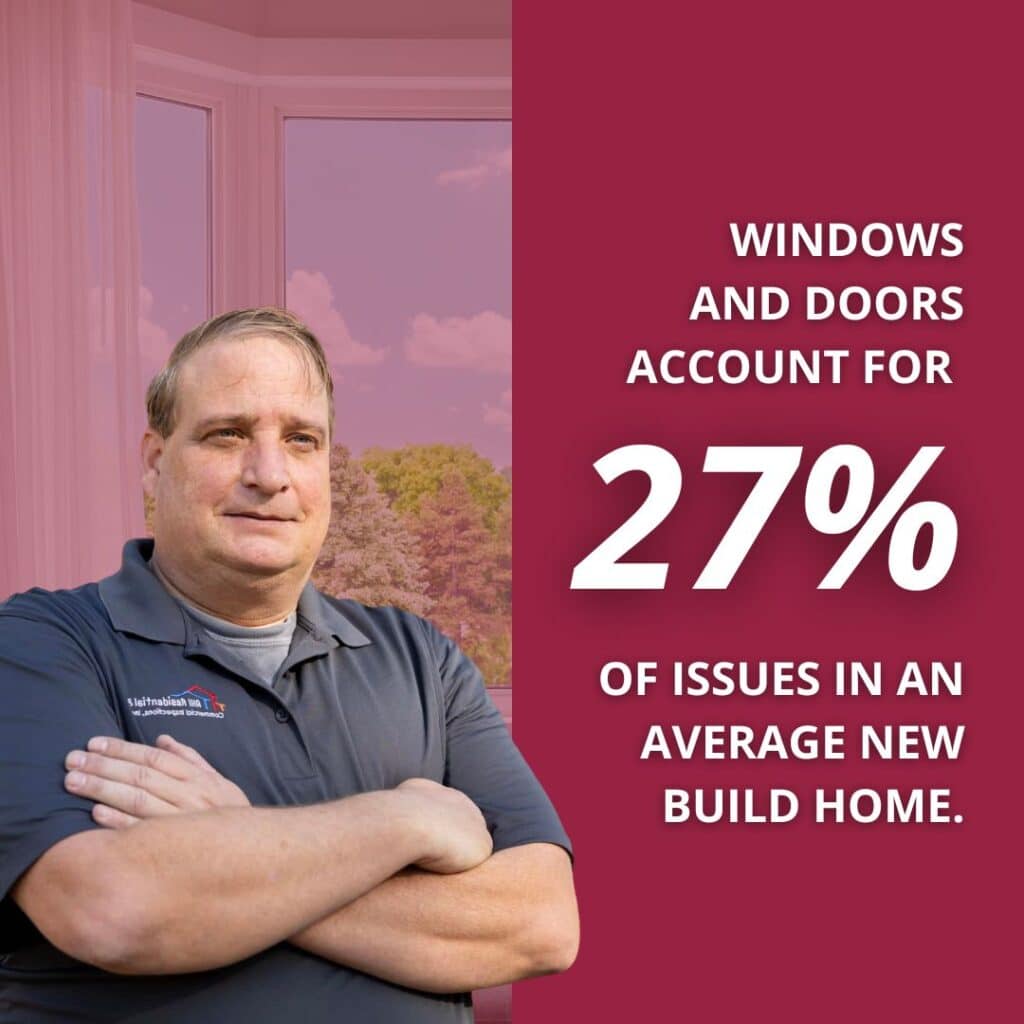
Poor installation is one of the biggest reasons new construction windows fail early. Windows and doors account for roughly 27% of defects found in an average new build home. Ensuring each window and door fits properly is a key step in the installation process.
Even a small mistake during installation can create drafts, leaks, and operational problems that compound over time.
Following standard installation practices and quality checks gives homeowners confidence in the long-term performance of their windows and doors.
Common Installation Defects
- Gaps between the window frame and the rough opening that let air and moisture inside
- Misaligned frames that prevent the window from opening, closing, or locking properly
- Missing or improperly installed flashing at the head and sill
- Incomplete or uneven sealant around interior and exterior edges
- Out-of-plumb installation that compromises both function and style
A properly installed window sits flush and level, seals completely, and operates smoothly. Full-frame or flanged windows installed correctly also reduce the risk of water intrusion behind the siding, which is a problem that becomes significantly more expensive once drywall is in place.
Glass and Frame Defects
Even when installation goes smoothly, new construction home windows can arrive with manufacturing defects or sustain damage during the build.
Glass Issues
Scratches, chips, or cracks are often caused by tools or debris during construction. Fogging or condensation between double-pane glass signals a failed seal. This means the insulating gas has escaped, energy efficiency is compromised, and the window will need to be replaced. This is not a cosmetic issue.
Frame Issues
Warped or bowed frames prevent a proper seal and allow drafts. Damaged glazing or discoloration can indicate low-quality materials or rough handling on site. Missing or misaligned trim and hardware are also documented during new construction inspections in Charlotte.
Energy Efficiency Concerns
New construction home windows should perform well from day one. In new homes, selecting the most efficient window types, such as casement and picture windows, can make a significant difference in energy savings and overall performance. When they don’t, your energy bills reflect it before anything else does.
Casement windows, which open outward with a crank, are considered the most energy-efficient operable windows available. Picture windows are fixed and do not open, making them the most energy-efficient option as they do not allow air leakage.
U-factor and SHGC are two of the most important metrics for window efficiency.
Many regions are shifting toward stricter standards for these metrics, as mentioned in recent building code updates, to ensure windows meet higher energy performance requirements.
Key Energy Performance Metrics
U-Factor measures how well a window prevents heat from escaping. Lower numbers mean better insulation. Many regions now require a U-factor of 0.30 or less, and triple-pane glass is increasingly used to meet those stricter standards.
Solar Heat Gain Coefficient (SHGC) measures how much solar heat a window allows inside. In North Carolina’s mixed climate, balancing summer heat reduction with winter passive solar gain matters on both ends.
Low-E Coatings are ultra-thin layers on the glass that reflect heat, keeping homes cooler in summer and warmer in winter. When Low-E coatings are damaged or inconsistently applied during installation, a significant portion of that efficiency is lost.
It’s important to understand these metrics so you can make informed choices about window durability and efficiency tailored to your climate and building standards.
Signs of Energy Efficiency Problems
- Drafts near the frame or sash with the window fully closed
- Interior condensation on the glass surface during cooler months
- Fogging between panes indicates seal failure
- Visible damage to the Low-E coating
Upgrading windows can significantly enhance a home’s energy efficiency, which is a key consideration for buyers in today’s market.
Operational Problems
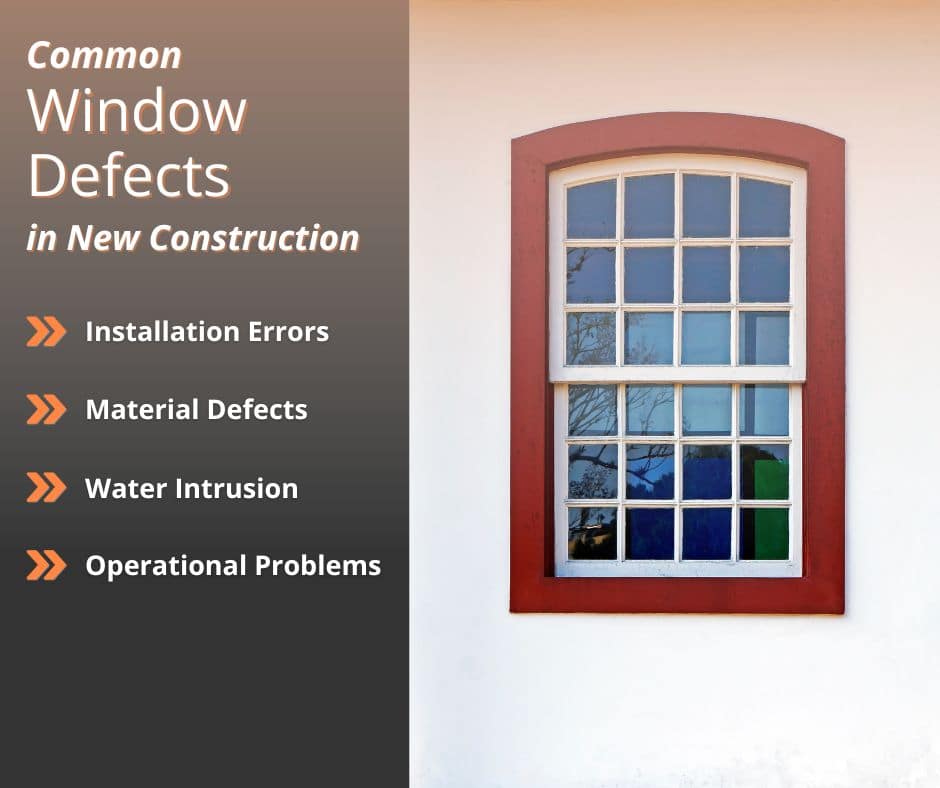
Windows in a brand-new home should open, close, lock, and seal without effort. Modern window designs offer easy operation and cleaning, with a variety of options available across different series and product lines to suit your needs.
The most common window types in new construction each come with their own set of potential defects.
| Window Type | How It Opens | Common Defects Found |
|---|---|---|
| Double-hung | Two sashes slide vertically | Binding sash, failed lock, stuck balancer |
| Single-hung | Bottom sash slides vertically | Binding, latch failure, and weatherstripping gaps |
| Casement | Crank, outward | Failed crank, poor seal, misaligned frame |
| Awning | Hinged top, outward | Hinge failure, sash gap, seal issues |
| Picture | Fixed | Glass defects, frame warping, seal failure |
Broken hardware, New Construction that don’t fit, and windows that won’t lock are all legitimate warranty claims when documented before your builder’s warranty expires.
Related Questions to Exlpore
What does a new construction inspection cover beyond windows? A new construction inspection evaluates the entire home, like structural components, roofing, electrical, plumbing, HVAC, insulation, and the full building envelope. Windows are one of the most commonly flagged areas, but they’re rarely the only issue found in a new build.
What is a pre-drywall inspection, and why does it matter for windows? A pre-drywall inspection happens after framing and rough-in work are complete, but before the walls close up. Planning ahead for this inspection can help catch window installation errors and flashing problems before they get buried. Once drywall is up, those repairs become significantly more involved.
What does a 1-year builder’s warranty inspection include? It documents defects before your builder’s warranty expires. Window defects, including operational issues, seal failures, and installation errors, are among the most common findings. A formal inspection report gives you the documentation needed to support warranty claims before the deadline.
Should I add mold testing if my windows have had water intrusion? Yes. Water intrusion around windows creates conditions for mold growth in areas that aren’t always visible. If an inspection reveals moisture around window frames or in surrounding walls, mold testing can determine whether remediation is needed before the problem grows.
Does AHI inspect commercial buildings for window defects? Yes. Commercial building inspections cover the building envelope, including windows, glazing systems, and exterior wall assemblies. Many of the same defect categories apply at a commercial scale, though the scope and complexity differ from residential work.
When to Call a Professional
If you notice any of the following in a new construction home, bring in a qualified inspector before the warranty window closes:
- Drafts or air movement near window frames
- Condensation between panes of glass
- Staining or soft spots on walls or trim around windows
- Windows that won’t open, close, or lock correctly
- Visible gaps or separation between the frame and the surrounding surfaces
Starting the inspection process early gives homeowners confidence that any issues will be addressed in the right order before the warranty expires.
Construction timelines in the Charlotte metro have been aggressive, and subcontractor quality varies. An inspection gives you the documentation you need to address issues while your builder is still responsible for fixing them.
Conclusion
Windows affect comfort, energy efficiency, security, and moisture control. In new construction, they’re also one of the most frequently defective components, and the best time to find those defects is before you sign or before your builder’s warranty runs out.
AHI Residential and Commercial Inspections serves buyers throughout the Charlotte metro and surrounding communities. Whether you need a new construction inspection, a pre-drywall walk, a 1-year warranty inspection, or add-on testing like mold or radon, our team is here to make sure your new home is everything it should be.
Ready to protect your investment? Schedule your inspection with AHI Residential and Commercial Inspections today.