
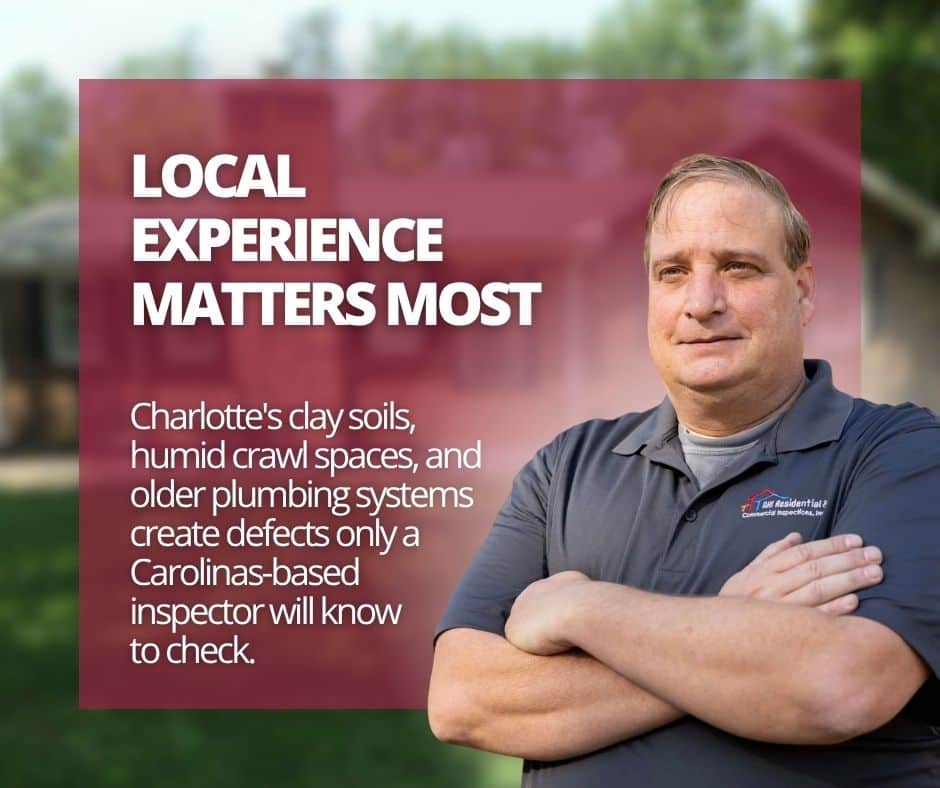
Choose a home inspector in Charlotte by verifying NC licensing, checking ASHI or InterNACHI certification, reviewing a sample report, and confirming the inspector uses modern tools like thermal imaging. Local experience matters most: Charlotte’s clay soils, humid crawl spaces, and older plumbing systems create defects that only a Carolinas-based inspector will know to check.
The cheapest option often costs more later, so weigh thoroughness and reporting quality over price alone. AHI Residential and Commercial Inspections is here to help you determine how to choose a home inspector.
The Right Inspector Matters
Buying a home is one of the largest financial investments most people will ever make. While fresh paint, new flooring, and professional staging can make a property look move-in ready, many costly defects remain hidden from view during a typical showing.
A Trained Eye
Foundation movement, crawl space moisture, roof leaks, electrical hazards, plumbing issues, drainage problems, and HVAC deficiencies often aren’t visible to buyers. These hidden conditions can lead to unexpected repairs costing hundreds or even thousands of dollars after closing.
That’s why choosing the right home inspection company is one of the most important decisions you’ll make during the home-buying process. A thorough inspection provides valuable information about a property’s condition and helps you make a more informed decision before finalizing your purchase.
Why Local Experience Matters
The Charlotte metro area presents unique inspection challenges that are different from many other parts of the country. A qualified local inspector should understand the regional construction methods, environmental conditions, and common defects frequently found in North Carolina and South Carolina homes.
Some of the most common issues found in Charlotte-area homes include:
- Expansive clay soils that can contribute to foundation movement and settlement
- Crawl space moisture due to the Carolinas’ hot, humid climate
- Drainage and grading issues that direct water toward foundations
- Polybutylene (PB) plumbing systems installed between 1978 and 1996
- Composition board siding that may be vulnerable to moisture-related deterioration
- Aging HVAC systems in established neighborhoods
- Minor settlement cracks that require proper evaluation to determine whether they are cosmetic or warrant further review
- New construction defects that may not be visible during a final builder walkthrough
An inspector with local experience understands how these conditions affect homes throughout Charlotte, Lake Norman, Fort Mill, Belmont, Davidson, Mooresville, Concord, Denver, and surrounding communities we serve.
Verify Licensing, Certifications, and Training
North Carolina and South Carolina require home inspectors to meet licensing requirements. Before hiring an inspector, verify that they hold active credentials and maintain continuing education.
Professional certifications and association memberships demonstrate an ongoing commitment to education and industry standards. Organizations such as the International Association of Certified Home Inspectors and the American Society of Home Inspectors provide advanced training and standards of practice for their members.
When interviewing an inspection company, don’t hesitate to ask about their experience, certifications, continuing education, and familiarity with homes in your specific area.
Great Home Inspectors Vs. Average Ones
Not all home inspections are created equal.
Some inspectors spend a limited amount of time at a property and generate a basic checklist report. Others take the time to thoroughly evaluate the home’s major systems, document findings with photographs, answer questions, and provide detailed explanations that help buyers understand what they are purchasing.
A quality inspection company should offer:
- Thorough evaluations of the home’s major systems and components
- Detailed digital reports with photographs and clear explanations
- Time for buyer questions and discussion of findings
- Modern inspection technology
- Knowledge of local construction practices and common regional concerns
- Prompt report delivery
The goal is not simply to identify defects. The goal is to help you understand the home’s overall condition so you can move forward with confidence.
Ask About Inspection Technology
Modern technology can help inspectors identify conditions that may not be visible during a standard visual inspection.
When comparing companies, ask whether they utilize:
- Thermal imaging cameras to identify potential moisture intrusion, insulation deficiencies, and electrical hot spots
- Moisture meters to help confirm elevated moisture conditions
- High-resolution digital photography
- Drone technology or pole cameras for difficult-to-access roof areas when appropriate
- Advanced reporting software that delivers organized, easy-to-understand reports
Technology does not replace experience, but it can provide additional information that helps inspectors better evaluate the property.
Review a Sample Inspection Report Before Booking
One of the most overlooked steps when hiring a home inspector is reviewing a sample report.
The report is the product you’ll rely on long after the inspection is complete. A quality report should include:
- Clear, easy-to-understand language
- Detailed descriptions of findings
- Full-color photographs
- Explanations of why a condition matters
- Recommendations for monitoring, repair, or further evaluation when appropriate
- Organized summaries of significant concerns
If a company cannot provide a sample report, consider it a warning sign.
Choosing a Home Inspector
When choosing a home inspector in Charlotte, be on the lookout for specific qualities so you can have peace of mind with your inspection.
Green Flags:
- Encourages buyers to attend the inspection summary
- Provides sample reports before booking
- Uses modern inspection technology
- Delivers detailed photo-rich reports
- Has extensive experience with Charlotte-area homes
- Takes time to answer questions before, during, and after the inspection
- Offers convenient online scheduling
Red Flags:
- Cannot provide a sample report
- Provides only checklist-style reports with minimal explanations
- Rushes inspections
- Discourages buyer participation
- Has limited experience with local housing conditions
- Focuses solely on being the lowest-priced option
The Real Cost of Choosing the Cheapest Inspector
Homebuyers often spend weeks comparing mortgage rates, insurance premiums, and closing costs, yet some choose a home inspector based solely on price.
While saving a small amount upfront may seem appealing, a missed issue can become significantly more expensive after closing.
Problems such as hidden roof leaks, moisture intrusion, deteriorated siding, drainage deficiencies, unsafe electrical conditions, or failing HVAC equipment can result in costly repairs.
The value of a professional home inspection is not measured by how quickly it is completed or how inexpensive it is. The value comes from the quality of information provided and the confidence it gives buyers when making a major financial decision.

Additional Services Worth Considering
Depending on the age, location, and condition of the property, additional inspections may provide valuable information.
Ask whether the company offers:
- Mold testing or air quality testing
- Radon testing
- Sewer scope inspections
- Termite inspections
- New construction phase inspections
- Pre-drywall inspections
- Builder warranty inspections
- Commercial property inspections
Bundling services can often simplify scheduling and provide a more complete understanding of the property.
Before Hiring a Home Inspector
Before booking, consider asking:
- How long will the inspection take?
- Can I review a sample report?
- What technology do you use during inspections?
- Can buyers attend the inspection summary?
- What additional services do you offer?
- How familiar are you with homes in my area?
- How quickly will I receive my report?
The answers can tell you a great deal about the company’s thoroughness, professionalism, and commitment to client service.
Related Questions to Explore
- How much does a home inspection cost in Charlotte, NC? Pricing depends on the home’s size, age, and any add-on services like radon or sewer scope testing. Rather than comparing quotes in isolation, ask each company what’s included in the base price so you’re comparing the same scope of work.
- What’s the difference between ASHI and InterNACHI certification? Both are respected national associations with their own exam and continuing-education requirements. Either credential is a reasonable baseline; what matters more is combining it with active NC/SC licensing and hands-on experience with local homes.
- Can I attend my own home inspection? Yes, and it’s one of the best ways to evaluate an inspector. Walking the property with the inspector lets you ask questions in real time and see firsthand how thoroughly they check each system.
- Is a home inspection the same as an appraisal? No. An appraisal estimates the home’s market value for the lender. An inspection evaluates the physical condition of the home’s systems and components for the buyer, which is why both are typically needed but serve different purposes.
- How soon after the inspection will I get my report? Turnaround varies by company. Ask for a specific timeframe upfront, since a slow report can put pressure on due-diligence deadlines in a competitive market.
When to Call a Professional Home Inspector
Any time you’re under contract on a property, before a purchase closes, or before a builder warranty period expires, it’s worth bringing in a licensed inspector rather than relying on a walkthrough alone. This is especially true for older homes, new construction nearing its final walkthrough, or any property where foundation, moisture, or electrical concerns aren’t visible without the right tools and training.
If you’re evaluating inspection companies serving Charlotte, Lake Norman, Fort Mill, Belmont, Davidson, Mooresville, Concord, or Denver, NC, the guidance above will help you separate a thorough inspector from one who’s just checking boxes.
Choose AHI Residential & Commercial Inspections
At AHI Residential & Commercial Inspections, we understand that purchasing a home is more than a transaction. It’s a major investment in your future.
Our inspections are designed to provide the information buyers need to make confident decisions. We combine local experience, advanced inspection technology, detailed digital reporting, and a commitment to client education throughout the inspection process. Meet the licensed inspectors on our team who perform every evaluation.
Conclusion
Whether you’re purchasing a historic home in Charlotte, a new construction property in Denver, NC, a waterfront home near Lake Norman, or an established home in Davidson, Mooresville, Belmont, Concord, or Fort Mill, SC, our goal is simple: provide a thorough inspection and clear information so there are fewer surprises after closing.
Schedule online or call us to discuss your inspection needs and learn how AHI Residential & Commercial Inspections can help protect your investment.