
If you’re buying a home in the Charlotte area, one of the most important investments you’ll make during the transaction is a professional home inspection. A standard inspection typically costs between $325 and $800, depending on the size, age, and complexity of the property.
While many buyers focus on the purchase price, understanding the condition of the property before closing can help prevent unexpected repair costs and provide valuable negotiating leverage. This begs the question: what’s the average home inspection cost?
Average Home Inspection Cost in Charlotte, NC
Most home inspection companies structure pricing based on square footage and property characteristics. While prices vary by company, the following ranges are common throughout the Charlotte area:
| Home Size (Square Feet) | Typical Inspection Cost |
| Under 1,500 sq. ft. | $325 – $425 |
| 1,500 – 2,500 sq. ft. | $425 – $525 |
| 2,501 – 3,500 sq. ft. | $475 – $600 |
| Over 3,500 sq. ft. | $600+ |
Keep in mind that specialty services such as radon testing, termite inspections, and sewer scope inspections are priced separately.
The Danger of a “Cheap” Home Inspection
When shopping for services during an expensive real estate transaction, it is tempting to choose the cheapest quote. However, not all home inspectors are created equal.
An incredibly cheap inspection often costs thousands of dollars down the road. Discount inspectors frequently rely on high volume over thoroughness. Inspectors with less knowledge, or those rushing through a job, do less actual investigating and routinely miss major red flags right in front of them.
Saving $100 on a discount inspector can instantly saddle you with a $15,000 foundation or roofing bill the moment you move in. A premium, highly educated inspector acts as your financial shield, catching major defects early so you can negotiate repairs before signing the closing papers.
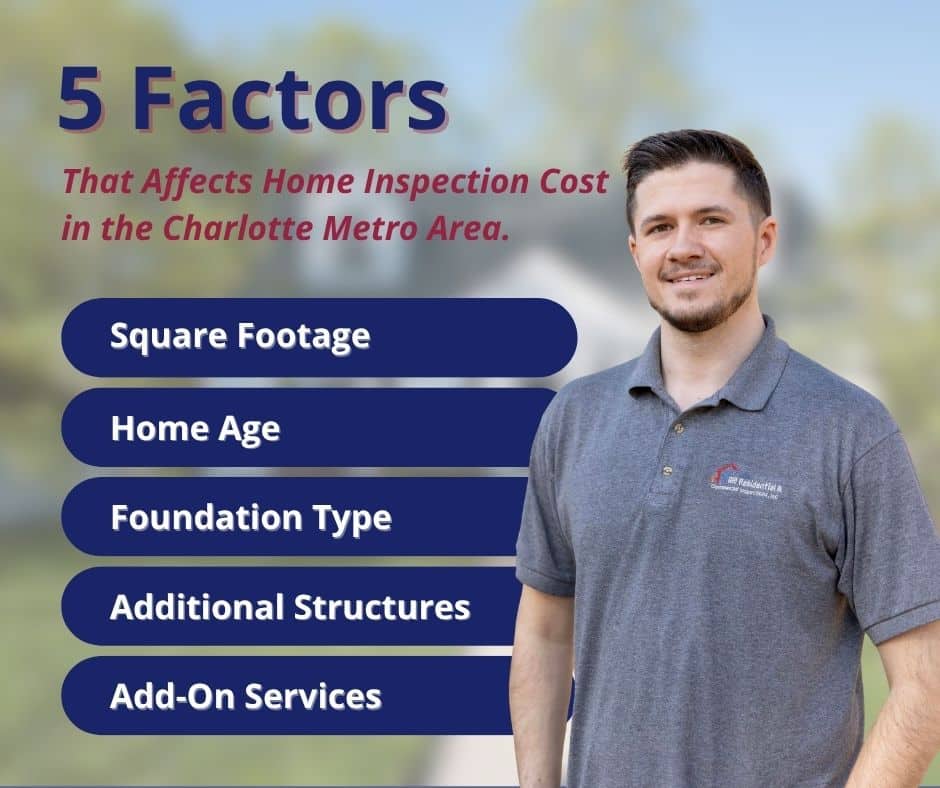
What Factors Affect Home Inspection Costs?
Several factors can influence how much you’ll pay for a home inspection in Charlotte, and understanding them upfront helps you compare quotes accurately.
| Factor | Why It Affects Inspection Cost |
|---|---|
| Square Footage | The size of the home is often the largest factor affecting inspection costs. Larger homes contain more systems, components, rooms, windows, electrical outlets, and roofing areas that must be evaluated. |
| Age of the Home | Older homes generally require more time to inspect. Homes built several decades ago may contain outdated electrical wiring, aging plumbing systems, structural modifications, or deferred maintenance that deserve closer examination. |
| Foundation Type | Charlotte-area homes are built on a variety of foundation systems, including slabs, crawlspaces, basements, and combinations of these. Crawlspaces and basements typically require additional inspection time due to accessibility and moisture-related concerns. |
| Additional Structures | Detached garages, workshops, guest houses, pools, and other outbuildings may increase inspection costs because they add components that must be evaluated separately. |
Charlotte–Specific Inspection Concerns
The Charlotte housing market includes everything from historic homes in established neighborhoods like Plaza Midwood and Dilworth to newly constructed homes in rapidly growing communities. Because of this diversity, inspection concerns can vary significantly from one property to another.
Some of the most common issues our Charlotte inspectors identify include:
- Crawlspace moisture and high humidity concerns
- Wood rot around exterior trim, fascia boards, and siding
- Termite activity and hidden wood-destroying insect damage
- Aging HVAC systems exposed to long, hot southern summers
- Roof wear caused by severe seasonal storms and wind exposure
- Drainage issues and improper grading around foundations
- Settlement and cracking associated with local clay-based soils
These conditions are not necessarily deal-breakers, but identifying them before closing allows buyers to make informed decisions and plan for future maintenance.
What’s Included in a Standard Home Inspection?
A comprehensive home inspection generally includes a visual evaluation of the home’s major systems and components, including the roof and attic, exterior siding and grading, foundation and structure, crawlspace or basement, plumbing and electrical systems, heating and cooling, interior rooms, windows and doors, insulation and ventilation, and built-in appliances.
Following the inspection, buyers receive a detailed digital report outlining observations, maintenance recommendations, and significant defects that may require further evaluation or repair.
Additional Inspections Worth Considering
Depending on the age, location, and condition of the property, additional specialty testing is highly recommended.
- Radon Testing ($150 – $250): Radon is a naturally occurring radioactive gas that cannot be seen, tasted, or smelled. Testing helps determine whether radon levels exceed the EPA’s recommended safety thresholds.
- Wood-Destroying Insect Inspection ($85 – $125): Termites are highly active throughout North Carolina. A wood-destroying insect (WDI) inspection identifies active infestations, previous damage, or conditions conducive to future activity.
- Sewer Scope Inspection ($325 – $500): A sewer scope uses a specialized camera to inspect underground drain lines for cracks, root intrusion, offsets, and blockages that are completely hidden during a standard home inspection.
- Mold Assessment ($299 – $425): When signs of elevated moisture, active water intrusion, or visible microbial growth are present, additional mold evaluation and air sampling may be recommended.
Savings occur when you add ancillary inspections like these to your home inspection. For example, if alongside a home inspection, the Mold Assessment is $299 vs. the $325 stand-alone cost.
Worth the Cost
For most buyers, a home inspection represents a small percentage of the overall purchase price but provides irreplaceable information about the property’s condition: critical safety concerns, major system deficiencies, expensive structural issues, active moisture intrusion, hidden roofing problems, hazardous electrical defects, and active plumbing leaks.
Understanding these conditions and keeping in mind the average home inspection cost allows buyers to budget appropriately before closing, negotiate repairs when necessary, and move forward with peace of mind.
Related Questions to Explore
- Who Pays for the Home Inspection in North Carolina? In most real estate transactions, the buyer pays for the home inspection as part of their due diligence process.
- How Long Does a Home Inspection Take? Most inspections take between two and four hours, depending on the size, age, and condition of the property. A large, complex 6,000-square-foot home can take 5 to 6 hours, while a condo under 1,000 square feet may take as little as an hour.
- Do New Construction Homes Need Inspections? Yes. Even newly built homes can contain installation defects, structural design oversights, incomplete work, or mechanical systems that require correction before the builder’s warranty period expires.
- Can I Attend the Inspection? Absolutely. Buyers are highly encouraged to attend whenever possible. Walking through the property with the inspector provides valuable insight into the home’s systems, maintenance needs, and overall condition.
When to Call a Specialist
A standard inspection is a visual, non-invasive review. It’s designed to flag concerns, not diagnose every issue to the last detail. If your inspector notes active moisture, unusual foundation movement, or signs of a system nearing the end of its life, it’s worth bringing in a licensed specialist before you finalize your purchase decision or repair negotiations.
A home inspector provides a broad, visual review of the entire home, while a specialist, such as a structural engineer or licensed electrician, is a tradesperson who evaluates one specific system in greater depth. Specialists are typically brought in only when the inspector’s report flags a concern that needs closer, hands-on evaluation, so you can understand how your inspection costs compare to the average home inspection cost.
Your inspector’s report will typically tell you when that extra step is warranted. The most likely types of specialists needed include a structural engineer, licensed electrician, or HVAC contractor.
Schedule Your Charlotte Home Inspection
Whether you’re purchasing your first home, upgrading to a larger property, or investing in real estate, a professional inspection can provide the information needed to make a confident decision.
At AHI Residential and Commercial Inspections, we provide thorough home inspections throughout Charlotte, Huntersville, Cornelius, Davidson, Mooresville, Denver, Concord, Fort Mill, and surrounding communities. Our detailed reports help buyers understand the property’s condition so they can move forward with confidence.
Schedule your inspection online or call us to book your inspection today.