
In short: Learn how to prepare for your home inspection in North Carolina. Simple steps to help buyers and sellers get a smooth, complete inspection.
📅 May 29, 2026 • ⏱️ 9 min read
The best way to prepare for a home inspection in North Carolina is to clear access to the home’s key systems and make sure everything is turned on and working before the inspector arrives. Whether you are buying or selling in the Charlotte area, a little preparation keeps the process moving and gives your inspector access to everything they need for a complete review.
A rushed or blocked inspection leaves gaps in the report. That creates uncertainty for buyers and can slow a sale to a stop. This guide covers what NC inspectors need, what to fix ahead of time, and what to avoid in the days before inspection day.
What Do Inspectors Look for During a Home Inspection in NC?
A home inspector evaluates the visible and accessible systems of a property. They are not looking to fail a home; rather, they are documenting its condition so the buyer can make an informed decision.
In North Carolina, climate plays a real role in what inspectors find. The combination of hot, humid summers and wet winters creates predictable patterns: crawl space moisture, HVAC strain, and roof wear from storm exposure are among the most common issues in Charlotte-area homes.
Inspectors typically evaluate:
- Roof: shingles, flashing, gutters, drainage
- Exterior: siding, foundation, grading, decks, porches
- Structural components: framing, floors, walls, ceilings
- Electrical: panel, outlets, wiring, smoke detectors, carbon monoxide detectors
- Plumbing: water pressure, supply lines, drains, water heater
- HVAC system: heating, cooling, filters, thermostat function
- Attic: insulation, ventilation, signs of leaks or pests
- Crawl space: moisture, vapor barrier, structural supports, HVAC ducts
- Interior: windows, doors, light switches, stairways, fireplaces
According to InterNACHI’s standards of practice, inspectors report on visible and accessible components only. They cannot open walls, move belongings, or predict future failures. This is why clear access matters so much.

Clear Access So the Inspector Can Do a Complete Review
If an inspector cannot safely reach an area, they cannot report on it. A blank field on the inspection report is a red flag for buyers.
Interior Access Points
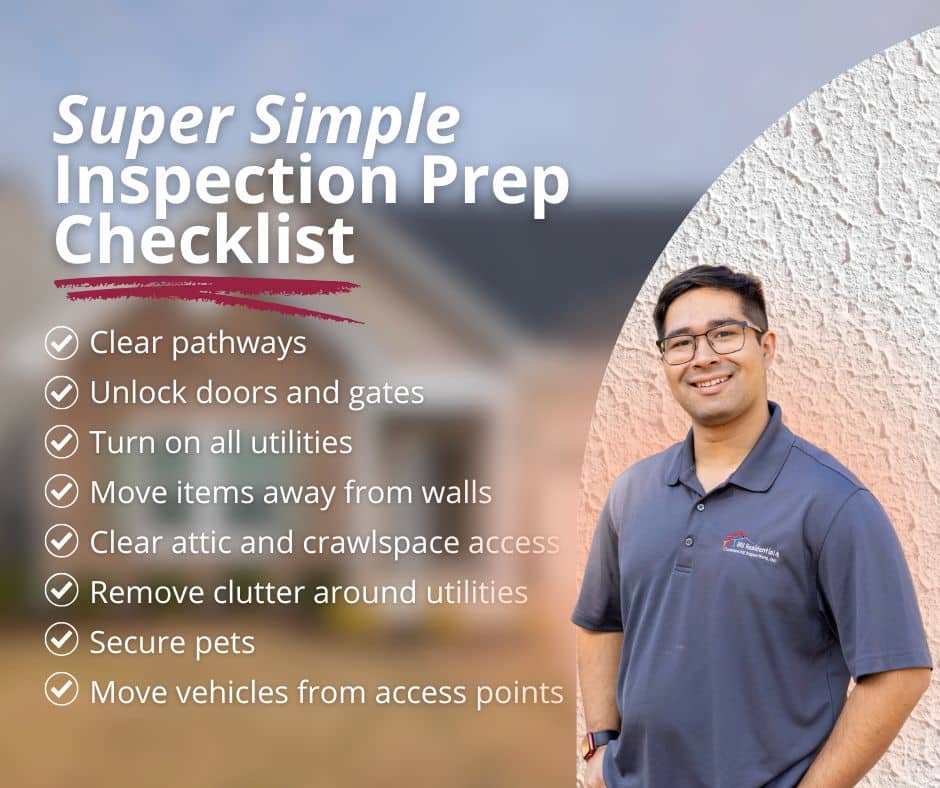
Before the inspection:
- Unlock all interior doors, including closets that lead to attic or crawl space hatches
- Clear hallways and move stored items away from walls
- Remove clutter from utility areas (near the water heater, electrical panel, and HVAC unit)
- Replace any burned-out light bulbs: a light that does not work gets flagged as a potential defect
- Secure pets in a crate or arrange for them to be off-site
- Remove laundry from washers and dryers
- Clear dishes from the dishwasher and sink
For a full overview of what buyers should expect from their inspection, review AHI’s buyer inspection services.
Attic and Crawl Space Access
Attics in the Charlotte area often contain signs of roof leaks, aging insulation, and ductwork issues tied to NC’s high humidity.
The crawl space is one of the most important areas in a North Carolina home because it reveals moisture patterns, pest activity, and structural issues that are especially common in this region’s clay-heavy soil and humid climate.
To prepare:
- Clear the area beneath the attic hatch
- Remove items blocking pull-down attic stairs
- Confirm attic lighting is working
- Remove debris from the crawl space entry
- Unlock any exterior access doors
- Leave the vapor barrier undisturbed
If the attic hatch is painted shut or swollen from humidity, which is common in NC summers, open it ahead of time. Inspectors will not force access that risks damaging the home.
Prepare the Exterior Before Inspection Day
Inspectors walk the full exterior to check for water management problems, siding damage, foundation concerns, and roof condition. Clear the perimeter so they can move freely.
Before the inspection:
- Trim bushes and vegetation away from siding and windows
- Move trash bins, garden equipment, and stored items away from the foundation
- Leave gates unlocked and provide keys or remotes for outbuildings
- Remove vehicles that block ladder placement near the roofline
- Check that crawl space vents are visible and unblocked
- Clear debris from gutters and confirm Hard Water drain away from the foundation
Standing water around the foundation is a common concern in the Charlotte area after rain. North Carolina’s clay soil holds moisture longer than sandy or loam-heavy regions, which means grading and drainage problems show up more frequently here.
If water has pooled near exterior walls or walkways, note it for the inspector, as they will evaluate drainage, grading, and any signs of water intrusion at the foundation.
Make Sure Utilities Are On and Working
Inspectors test basic functions: running water, electrical power, heat, and cooling. If a system cannot be switched on, it cannot be evaluated.
North Carolina’s climate means HVAC systems work hard year-round since hot summers push cooling systems, and the region’s mild but unpredictable winters still require reliable heat. An inspector who cannot test your system leaves a significant gap in the report.
Check the following before the inspection:
- Water supply valve is open
- Gas valves are on, and pilot lights are lit (including the water heater)
- All circuit breakers are in the on position; do not leave any tripped
- Smart thermostats are unlocked and accessible
- HVAC filter is clean, and the system can be activated
- Refrigerator, stove, oven, and dishwasher are accessible and not blocked
If the home has been vacant, visit it before inspection day to verify utilities are still active. An incomplete inspection delays the buyer’s timeline and often triggers a second visit.
Simple Repairs That Make a Real Difference
You do not need to complete major renovations before an inspection. A handful of small fixes prevent unnecessary flags on the report and show the home has been maintained.
Helpful repairs to complete ahead of time:
- Replace burned-out bulbs throughout the home
- Swap out dirty HVAC filters
- Test smoke detectors and carbon monoxide detectors and replace batteries if needed
- Tighten loose doorknobs and cabinet hardware
- Re-caulk around tubs and sinks if the existing caulk is cracked or pulling away
- Clear sink cabinet interiors so the inspector can check drain lines
- Remove personal items from around the water heater
- Confirm all windows open, close, and lock properly
Small repairs like these signal that the home has been cared for and reduce the length of the deficiency list. For an idea of what repair costs look like if issues are found, AHI provides home repair estimates after each inspection.
What NOT to Do Before a Home Inspection
Some sellers try to conceal problems before the inspection. This almost always backfires. Inspectors look for the cause of a condition, not just the surface.
Avoid these actions:
- Painting over water stains or moisture marks
- Caulking over fresh cracks in walls or foundation
- Running a dehumidifier only on inspection day to mask moisture readings
- Blocking off rooms or areas with stored items
- Placing furniture in front of known problem spots
Attempting to hide defects shifts negotiation power to the buyer and can raise legal concerns after closing. Open, honest preparation is always the better strategy.
What to Do on Inspection Day
A few last-minute steps make the visit go smoothly:
- Plan to leave the home or out of the inspector’s way
- Leave remotes for the garage door, ceiling fans, and exterior gates
- Leave paperwork for any recent repairs, warranties, or insurance claims where the inspector can find them
- Turn on the pilot light for gas appliances if it is not already lit
- Remove laundry from the washer and dryer before the inspector arrives
- Keep the home at a comfortable temperature so HVAC systems can be tested
For sellers who have recently moved out, one last walk-through the day before helps confirm nothing was accidentally shut off or locked.
Related Questions to Explore
- How long does a home inspection take? Most inspections take 2–3 hours, though older homes or larger properties with multiple crawl spaces and outbuildings can take longer. You can expect your digital report the same day or by the following morning.
- Should the seller be present? It’s best if sellers step out. This allows the buyer and inspector to move freely and discuss findings openly. If questions arise later, they are typically handled through the real estate agents once the report is delivered.
- What are common findings in North Carolina homes? Our local climate often leads to crawl space moisture, aging HVAC systems, and worn roofing. We also frequently flag minor electrical issues and plumbing leaks discovered via thermal imaging. These are common conditions, not necessarily deal-breakers.
- Can an inspection find hidden moisture? Yes. Beyond checking for visible stains, we use thermal imaging to detect temperature shifts that suggest moisture trapped behind walls. Evaluating foundation health and crawl space moisture is a top priority for our team in Charlotte.
- What happens after the inspection is over? You’ll receive a report detailing the home’s condition, safety concerns, and recommended repairs. Buyers then work with their agents to negotiate repairs or credits.
When to Call a Professional
Preparation handles a lot, but some situations call for a licensed inspector before you make any decisions.
Schedule a professional inspection when you are:
- Buying a home and want a complete picture of the property’s condition
- Selling and want to identify and address issues on your own timeline
- Noticing moisture stains, musty smells, or soft spots in floors or walls
- Hearing electrical buzzing or experiencing unexplained power issues
- Concerned about crawl space humidity after a wet season
- Preparing for a large renovation or systems upgrade
- Interested in understanding the safety of older electrical or plumbing systems
AHI Residential and Commercial Inspections serves buyers and sellers across the greater Charlotte region, including Concord, Gastonia, Mooresville, Matthews, Huntersville, and surrounding Mecklenburg and Union County communities.
The team delivers same-day reports and includes repair cost estimates with every inspection, which is a useful starting point for negotiations in NC’s fast-moving real estate market.
Conclusion
Preparing for a home inspection does not have to be complicated. Clear access to the home’s key systems, make sure utilities are on, complete a few simple repairs, and let the inspector do their job.
Buyers get a clearer picture of what they are purchasing. Sellers avoid surprises that could delay or derail the sale.
If you are preparing for an upcoming inspection in the Charlotte area, schedule with AHI Residential and Commercial Inspections and get a thorough, same-day report from an experienced team.